AI & Data Science Certification Course with AI & ChatGPT
- Gain practical knowledge which industry needs
- Build real-time projects with industry-aligned tools
- Interactive sessions from industry veterans
- Updated curriculum designed for AI-era
- Guaranteed placement support with our career services

Numbers That Speak Our Success
Success Stories – They Believed, Learned & Achieved!













Our learners are working in leading organizations
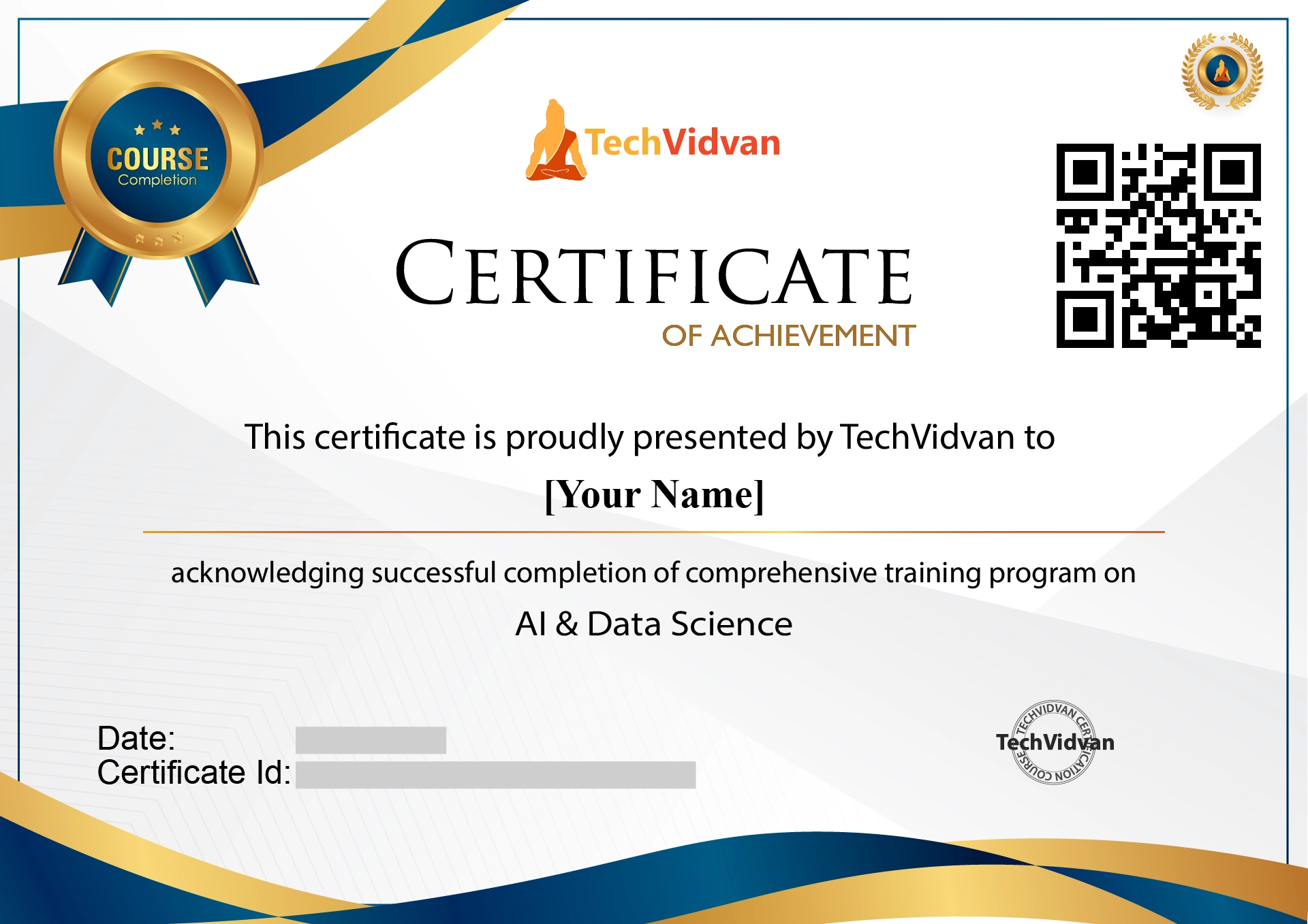
Industry-renowned Certification
Need Personalized Guidance? Talk Directly to Your Instructor

TechVidvan Online Machine Learning Training Course Curriculum
- What is Python, and why should you learn it?
- Python’s broad range of applications
- Understanding platform-dependent vs. platform-independent languages
- Key features and limitations of Python
- A brief history of Python
- Installing Python and setting up your environment
- Setting up PyCharm and understanding IDLE
- The flow of Python code execution
- Writing your first “Hello World” program
- Understanding Python statements, indentation, and comments
- Using print() and taking user input
- Methods, variables, and identifiers in Python
- Python’s various data types and rules for declaring identifiers
- Mastering input and output functions in Python
- Reading data in a single line
- Using the print() function with formatted strings and the format() method
- Exploring replacement operators in Python
- Overview of Python operators
- Bitwise, arithmetic, and assignment operators
- Understanding number system conversions
- Identity operators and their uses
- Implementing conditional statements: if, else, elif
- Creating pyramid patterns using control statements
- Using transfer statements: break, continue, and pass
- Introduction to loops and their types
- Working with while loops and for loops
- Implementing nested for loops
- Understanding what strings are in Python
- Built-in string functions and methods
- String type casting and manipulation using Python’s string class
- Introduction to collections in Python
- Working with lists, tuples, sets, frozen sets, and dictionaries
- Understanding byte arrays and their operations
- Defining and using functions in Python
- Function arguments, call by value, and returning values
- Passing functions as arguments
- Global variables, keywords, and the eval() method
- Implementing recursion through programs like factorial and Fibonacci series
- Understanding recursion in Python and how to reverse a number
- Introduction to lambda functions
- Using filter(), map(), and lambda functions together
- Understanding arrays and their operations
- NumPy arrays, multidimensional arrays, and matrix operations
- The difference between views and copies in NumPy
- Implementing binary search and bubble sort algorithms in Python
- Understanding the difference between procedural and object-oriented programming
- Classes, objects, and self variables
- Polymorphism, operator overloading, inheritance, and constructor overloading
- Introduction to exception handling in Python
- Using try, except, finally blocks
- Writing user-defined exceptions
- File modes and operations (read, write, append)
- Working with CSV files and pickling in Python
- Using tell() and seek() methods to navigate files
- What is NumPy?
- NumPy Installation in Python
- NumPy Installation in PyCharm
- Different ways to create arrays
- Practical examples of array creation
- Attributes of NumPy ndarray
- Hands-on practice with array attributes
- NumPy arange, linspace, logspace Methods
- Practical Implementation of NumPy arange, linspace, logspace Methods
- NumPy Array Zeros(), Ones(), Full() & Eye() Functions
- Practical Implementation of NumPy Array Zeros(), Ones(), Full() & Eye() Functions
- NumPy Array Comparison
- NumPy any(), all() & where() Functions
- NumPy Arithmetic Operations
- Practical Implementation of NumPy Arithmetic Operations
- NumPy Statistical Functions
- Practical Implementation of NumPy Statistical Functions
- Reference vs View vs Copy in NumPy
- Practical Implementation of Reference vs View vs Copy in NumPy
- NumPy Array Concatenation
- Join NumPy Array Using Concatenate, Stack, VStack, HStack and Depth Method
- NumPy Splitting Array
- Practical Implementation of NumPy Splitting Array
- What is Python Pandas
- Why Python Pandas
- Python Pandas Installation on Windows
- Python Pandas Installation on PyCharm
- How to Download Kaggle Dataset
- What is Series in Python Pandas
- Pandas Series Property
- Practical Implementation of Pandas Series Properties
- Mathematical Operations on Series in Pandas
- Pandas Dataframes
- How to Create Pandas DataFrame
- Create DataFrame using Excel, CSV and Clipboard in Pandas
- Different Ways to Create DataFrame
- Practical Implementation of DataFrame Creation
- Export Pandas DataFrame to CSV and Excel File
- DataFrame Attributes in Python Pandas
- DataFrame Slicing in Pandas
- Practical Implementation of DataFrame Slicing
- Sorting Python Pandas DataFrame in Ascending and Descending Order
- Drop Duplicate Values From Pandas DataFrame
- Handle Missing Data fillna & dropna in Pandas
- Pandas loc vs iloc
- Practical Implementation of Pandas loc vs iloc
- Ways to Filter Python Pandas
- Advanced Data Analysis using Pandas
- Pandas Join DataFrames
- Apply Join in Pandas DataFrame
- Join in Pandas Without a Common Column
- Practical Implementation of Join in Pandas Without a Common Column
- Concatenate DataFrames in Pandas
- Practical Implementation of Pandas DataFrames Concatenation
- Pandas where() Function
- Practical Implementation of Pandas where() Function
- Pandas Groupby Method
- Practical Implementation of Pandas Groupby Method
- Pandas Aggregate Functions
- Pandas Equivalent SQL Queries
- Practical Implementation of Pandas SQL Queries
- isin() and not isin() Method in Pandas DataFrame
- Pandas nlargest() Function
- Insert, Delete, Update in Pandas DataFrames
- What is Matplotlib?
- Matplotlib Installation in PyCharm
- Installation of Matplotlib Library in Python
- How to Design a Chart
- Matplotlib Markers
- Types of Matplotlib Markers
- Line Properties in Matplotlib
- Change Line in Chart using Matplotlib
- Change Color and Font of Title, x-axis & y-axis of Chart Using Matplotlib
- Matplotlib Legend Function
- Practical Implementation of Legend Function
- Add Grid Lines in Chart using Matplotlib
- Apply Grid in Graph Plot in Matplotlib
- Subplot in Matplotlib
- Practical Implementation fo Matplotlib Subplot
- sxticks(), yticks(), xlabel(), ylabel(), xlim(), ylim() Methods in Matplotlib
- Matplotlib Scatter Plot
- Practical Implementation of Matplotlib Scatter Plot
- Cmap and ColorBar in Scatter Plot
- Create Vertical & Horizontal Bar Graph
- Plot Multiple Bars in Single Bar Graph
- Create Pie Graph in Python
- Matplotlib Histogram Graph
- Draw Line Plot
- Draw Line Plot using Seaborn Github
- Types of Parameters in Line Plot
- Histogram Plot
- Displot
- ECDF Plot
- Bar Plot
- Heatmap Plot
- Scatter Plot
- Pair Plot
- Relationship Graph
- Seaborn E-Commerce Sales Visualization Project
- Seaborn Covid-19 Case Analysis Project
- Seaborn Movie Rating Explorer Project
- What is Statistics
- Understanding different types of data
- Measures of Central Tendency
- Coefficient of Variation
- Shape of Distribution
- Visualization Techniques
- Basics of Probability
- Conditional Probability and Bayes Theorem
- Variables and Their Types
- Probability Distribution
- Poission Distribution
- Standard Normal Distribution
- Exponential Probability Distribution
- Uniform Distribution
- Log Normal Distribution
- Central Limit Theorem
- Different sampling methods
- Hypothesis testing explained
- Types of errors in hypothesis testing
- Two-tailed tests
- Understanding p-value
- Introduction to Data Science
- How Data Science has evolved over the years
- Important terms and concepts you must know
- Difference between Data Science and AI/Machine Learning
- Converting business requirements into data-driven solutions
- Preparing and cleaning data for analysis
- Defining the problem statement clearly
- Collecting data from reliable sources
- Processing and cleaning raw data
- Analysing datasets and building models
- Data Scientist
- Data Analyst
- Data Engineer
- Machine Learning Engineer
- Business Intelligence Analyst
- Business Analyst
- Data Science in Finance and Banking
- Data Science in Retail
- Data Science in Health Care
- Data Science in Logistics and Supply Chain
- Data Science in the Technology Industry
- Data Science in Manufacturing
- Data Science in Agriculture
- What is Machine Learning – an easy-to-understand overview
- Difference between AI, ML, DL, and Data Science
- Evolution of ML and its objectives
- Formal definition of Machine Learning
- Step-by-step Machine Learning process
- Categories of Machine Learning
- Structure and importance of datasets
- Types of datasets used in ML
- Machine Learning project life cycle explained
- Programming languages commonly used for ML
- Understanding labels and features
- Introduction to algorithm types
- Basics of supervised learning
- Regression techniques in supervised learning
- NumPy, Pandas, Matplotlib and Scikit-learn Installation in PyCharm
- Price Prediction Application
- Salary Prediction of Employees
- Marks Prediction of Students
- How to Visualize Predicted Value
- Insurance Price Prediction
- Salary Prediction
- Home Price Prediction
- Sales Forecasting for a Retail Store
- Multiple Linear Regression Model to Predict Annual Tuition Fee
- Multiple Linear Regression Model to Predict Annual Tuition Fee GUI Based
- How to Save Trained Model in File using Pickle
- How to Save Trained Model in File using Joblib
- Dummy Varibales in Dataset
- Jupyter Notebook Installation
- Write ML Algorithm in Jupyter Notebook
- Split Data in Training and Test Data
- What is Logistic Regression
- Insurance Prediction
- Employee Retention Prediction
- Digits Prediction
- Car Price Prediction
- Loan Prediction
- Admission Chance Predictor
- Admission Chance Predictor GUI Based
- Loan Approval Classifier using Logistic Regression
- Suspicious Login Detection using Logistic Regression
- What is Decision Tree?
- Practical Implementation of Decision Tree
- Iris Flower
- Tennis Game
- Titanic Movie
- College Admission Eligibility Predictor using Decision Tree
- Restaurant Preference Classifier using Decision Tree
- Flight Booking Cancellation Prediction using Decision Tree
- What is Random Forest Algorithm
- Loan Approval Classifier
- Tourist Destination Recommender based on Prefernces
- Credit Card Fraud Detection
- Digits Image Classification
- Iris Flower Prediction
- What is Gradient Boosting
- Salary Prediction based on Skills and Experience
- Diabetes Prediction
- Stock Price Prediction
- Student Dropout Risk Prediction
- Facial Expression Recognition
- What is XGBoost in Machine Learning and why it is powerful
- Insurance Claim Approval
- What is K-means Clustering in Machine Learning
- Customer Segmentation
- Grouping Lifestyle Habits to Predict Health Risk
- Youtube Video Clustreing by Views, Likes and Watch-time
- What is Deep Learning
- What is a Neuron
- Deep Learning ANN Model – Hours Studied vs Exam Score
- Electricity Bill Estimator
- Heart Disease Predictor
- What is Loss Graph
- Student Placement Prediction
- Used Car Price Prediction using Vehicle Specifications
- Air Pollution Estimation
- Image Classification of Fashion Items
- Handwritten Digit Recognition
- What is Computer Vision?
- Installing OpenCV with pip
- Installing OpenCV in PyCharm
- OpenCV imread() & imwrite() Functions
- Create Copy of an Images
- How to Show, Resize and Rotate an Image in OpenCV
- Merge Multiple Images in OpenCV
- Flip an Image in OpenCV Using Bitwise Not Function
- Change Image Color Using cvtColor Function in OpenCV
- Capture and Record Video Using OpenCV
- Capture Video From Webcam Camera in OpenCV
- Draw Line on Image & Video in OpenCV
- Draw a Circle and Put Text on Image in OpenCV
- add vs addWeighted Function in OpenCV
- Image Properties (Shape & Size) in OpenCV
- Crop an Image in OpenCV
- OpenCV hconcat() & vconcat() Functions
- OpenCV Concatenating Images
- Blur an Image in OpenCV
- Graphical Image Rotation Application in OpenCV
- Show/Open Dynamic and Multiple Images in OpenCV
- Dynamically Resize Image in OpenCV
- Open Video using Dialog Box
- Resize Video and Image in OpenCV with Dimensions
- Draw Different Shapes in OpenCV
- OpenCV Image Transformations
- Convert BGR Image to RGB Image
- Color Conversion in OpenCV
- Use Different Color Codes in OpenCV
- OpenCV Canny Edge Detection
Tools & Technologies


Learn From Industry’s Best Instructors


Your Data Science Journey Starts Here — Try before you Buy
Master Data Science from Scratch
Join our hands-on AI & Data Science course crafted by industry veterans and build real-world skills. It’s not just a course, it’s a job-ready bootcamp.|
Start 📅 25-May-2026 |
Schedule 🕗 6.30 PM IST (Mon-Fri) |
Access Duration 🕗 Lifetime Access |
Price |
Enroll Now |
Enroll in Self-paced AI & Data Science Course
Key Features:
- ✓ Self-paced Expert-led Course
- ✓ Practical-based Curriculum
- ✓ Full Notes + Study Material
- ✓ Real-world Practicals
- ✓ Assessments to Test Skills
- ✓ Interview Ques of Top MNCs
- ✓ Real-time Live Projects
- ✓ Beginner to Advanced
- ✓ 3 years Access Duration
- ✓ Professional Certificate
Key Features:
- ✓ Everything in “PLUS” plus:
- ✓ Job-Ready Skill Training
- ✓ Live Industry Case Studies
- ✓ 1:1 Expert Counselling
- ✓ Dedicated Job Assistance
- ✓ Resume & Interview Prep
- ✓ Additional live Projects
- ✓ Latest Tools/Tech Covered
- ✓ Lifetime Course Access
- ✓ Learn with ChatGPT & AI
Key Features:
- ✓ Everything in “PRO” plus:
- ✓ LinkedIn, job portal optimization
- ✓ Career guidance from experts
- ✓ Lifetime Support
- ✓ Access to Job Portal
- ✓ Interview Ques of MAANG Companies
- ✓ After Job Support
- ✓ Lifetime Upgrades to latest version
- ✓ Industry-grade projects
- ✓ Enhanced Career Opportunities



TechVidvan Data Science Course Objectives
Get ready to deep dive into the world of data!
In this Data Science training program, you will:
- Discover What is Data Science: Learn how data shapes our lives every day. Do you know that 90% of the world’s data was made in just last two years?
- Play with Real Data: Work on real-life projects, just like a real data scientist!
- Explore Machine Learning: Find how computers can learn and train from data and make smart guesses. It’s like teaching a computer to think!
- Use Cool Tools: Learn tools like Python and other special libraries that help you handle data easily.
- Solve Big Problems: Use data to find solutions to important problems in health, environment, etc.
- Build Your Own Projects: Create interesting projects that you can share with others and be proud of.
By the end of the online Data Science Certification course, you’ll have all the skills required to start your journey in data science.
Why should you learn Data Science?
Data Science is like having a special key to unlock secrets hidden in tons of information! Every day, we create huge amounts of data—every text message, every video watched, and every game played adds more and more.
By learning Data Science, you can turn this mountain of data into useful ideas. Imagine being able to predict what movies people will love, help doctors find better cures, or even make cool apps that everyone wants to use!
If you’re an engineering student or a professional new to data science, this field is full of exciting opportunities. You’ll learn how to teach computers to think on their own, find patterns that others might miss, and solve big problems that can make the world a better place.
- Unlock Hidden Secrets: Data Science helps you find patterns and answers hidden in big piles of data, just like a detective!
- High Demand for Skills: Companies all around the world need data scientists, so you can find exciting job opportunities.
- Solve Real Problems: Use data to make a difference in healthcare, the environment, technology, and more.
- Learn Cool Tools: Get hands-on with tools like Python, used by NASA and Google!
- Make Smart Decisions: Help businesses and organizations make better choices by understanding what the data tells us.
- Be Part of the Future: Data is growing every day—you can be at the front of new discoveries and innovations.
- Boost Your Problem-Solving Skills: Improve how you think and solve puzzles, which is helpful in everyday life.
- Versatile Career Paths: Work in many fields like sports, music, science, and more—wherever data is used!
- Create Amazing Projects: Build things like apps that recommend songs or predict weather patterns.
- Stand Out: Learning Data Science makes you unique and valuable in today’s technology-driven world.
What is Data Science?
Data Science, the hottest and highest-paid field on the planet, is like playing with data and generating hidden insights. Every day, world creates huge volume of information – photos, videos, social media, sensors, and more. We create 2.5 quintillion bytes of data ie 2.5 trillion GBs are made each day?
How can we handle all this data and generate meaningful information? That’s where Data Science comes into the picture. It helps us find hidden patterns and data-driven answers to drive business. Data scientists use the latest machine learning tools and techniques to identify patterns and generate relevant reports. The ultimate objective is to help businesses make the right decisions at the right time.
How your YouTube knows which video you might like, or how does Amazon suggest items you might want? That’s Data Science at work! It helps doctors find better treatments, makes games more fun, and even helps protect the environment.
In this Data Science online course, we’ll learn how to collect and understand data, use cool tools like Python, and solve real world problems. Join us, and let’s dive into the exciting world of Data Science together!
What to do before you begin?
Prerequisites of this Data Science Online Training Course
Great news! You don’t need to be a data expert to join us.
Here’s what you need:
- Basic Math Skills: If you can handle simple math like adding and subtracting, you’re good to go!
- Computer Know-How: Comfortable using a computer? Perfect! Browsing the internet and typing are all you need.
- Curiosity and Excitement: Bring your eagerness to learn and explore new things.
- Willingness to Learn Coding: Never coded before? No problem! We’ll start from the very beginning.
That’s it! No special experience or fancy degrees required. We’re here to help you every step of the way. So, are you ready to dive into the amazing world of Data Science with us?
Who should go for this Online Data Science Certified course?
This Data Science course is for anyone who is interested to know about data! If you’re:
- An Engineering Student: Discover how data can turn numbers into amazing solutions and solve real-world problems
- An Industry Professional: Add powerful skills to your toolbox to boost your work
- New to Data Science: We’ll guide you step by step on this exciting journey.
- A Curious Learner: Explore new ideas and answers to big questions
All you need is a desire and passion to learn and discover.
By enrolling in our Data Science training program, you can expect the following benefits:
Unlock a world of possibilities by joining this Best Data Science self paced course!
Here’s what you’ll gain:
- High-Demand Skills: Learn Data Science, one of the fastest-growing fields today. Companies everywhere need people who can analyse and use data.
- Hands-On Projects: Work on real-life problems just like a real data scientist. Imagine analyzing data to help save endangered animals or improve healthcare!
- Learn Cool Tools: Dive into Python and other powerful tools used by professionals. Did you know NASA uses Python for their space missions?
- Boost Your Career: Open doors to exciting jobs and opportunities. Data scientists are needed in every industry, from tech to sports.
- Solve Real-World Challenges: Use data to find answers to big questions about our world. Help make important decisions that can change lives.
- Build Your Own Portfolio: Create impressive projects that you can show to future employers or schools. Stand out from the crowd!
- Understand the World Better: Data is everywhere. Learn how to make sense of it and see patterns others might miss.
- Join a Learning Community: Connect with other curious minds. Share ideas, help each other, and make new friends.
- No Experience Needed: Start from the basics. Even if you’re new to data science, we’ll guide you every step of the way.
- Fun and Engaging Lessons: Enjoy learning through interactive activities and exciting challenges.
- Become a Data Detective: Find hidden clues in big piles of information. It’s like solving a mystery!
- Stay Ahead of the Curve: Be part of the future where data drives decisions in every field.
- Improve Problem-Solving Skills: Think critically and find smart solutions. These skills are useful everywhere!
- Flexible Learning: Learn at your own pace anytime and from anywhere. Fit the course into your busy schedule.
- Get Certified: Receive a certificate to show off your new skills. Add it to your resume or LinkedIn profile to show to employers.
- Make a Difference: Use what you learn to help others and make the world a better place.
Jobs after Learning TechVidvan Data Science Course
Great news! Learning Data Science opens the door to many amazing job roles.
Here are some job options you can look forward to:
- Data Scientist: Be the detective and find hidden answers from the data. Companies like Google and Amazon hire data scientists to improve their product quality.
- Data Analyst: Help businesses make smart decisions by studying data trends. Did you know that data analysts can help save companies millions of dollars?
- Machine Learning Engineer: Teach computers to learn from data. You could help create self-driving cars or smart home devices!
- Business Analyst: Use data to solve business problems and make companies better. Your ideas could change how businesses work.
- Data Engineer: Build systems that collect and store data. Imagine working with huge amounts of data like Facebook or YouTube!
- Artificial Intelligence Specialist: Work on cutting-edge AI projects. AI is used in healthcare, finance, and even space exploration!
- Statistician: Use math to understand data. You can help in sports, where statisticians help teams win games.
- Research Scientist: Explore new ways to use data in science. You could help discover new medicines or protect the environment.
- Data Visualization Expert: Turn complex data into easy-to-understand pictures. Help people see what the data means at a glance.
- Big Data Engineer: Handles massive amounts of data. Did you know that 90% of the world’s data was created in the last two years?
These jobs are in high demand, and companies are looking for people like you! With the skills you’ll learn in this online Data Science course, you’ll be ready to take on these exciting roles.
Start your journey now, and you could be the next big name in Data Science!
Our students are working in leading organizations
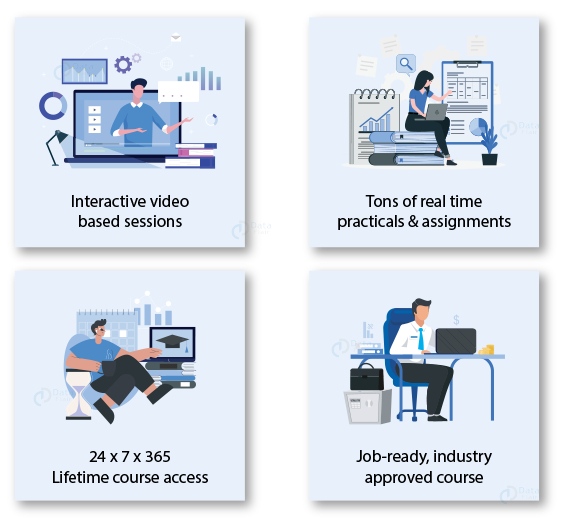
Features of Online Data Science Course
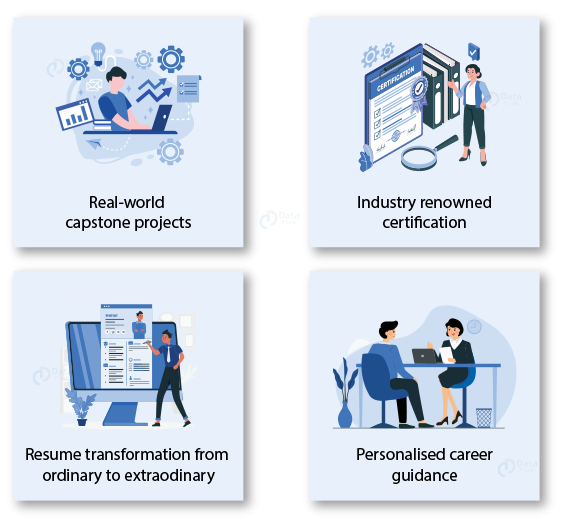
Looking for Industry Expert Counselling?
We are a team of trainers who have 20+ years of Industry Experience. They provide project based training and cover real time scenarios during the interactive training sessions.
Contact our Industry Experts & get answers to all your queries.
Data Science Online Training FAQs
No worries! You don’t need any prior programming experience. We’ll start from scratch and teach you everything you need to know, especially using Python.
Just a computer with internet access! We’ll guide you on how to install free tools like Python and Jupyter Notebooks.
That’s okay! We’ll cover the basic math you need in a simple and easy-to-understand way. If you can handle basic algebra, you’ll do great.
Absolutely! This Data Science online course is designed for newcomers. We’ll explain everything in simple terms and build up your knowledge step by step.
Yes! You’ll work on real-life projects like analyzing weather data or creating a simple movie recommendation system. It’s a fun way to learn by doing.
You’ll have access to helpful instructors and a community of fellow learners. We’re here to answer your questions and cheer you on!
Yes, you’ll receive a certificate that you can share with employers or add to your resume to show off your new skills.
Data Science skills are in high demand. You’ll open doors to exciting jobs like Data Analyst, Machine Learning Engineer, and more.
Definitely! You’ll have ongoing access to all the lessons and resources so you can revisit them anytime.
The complete course duration is 90 hours. Plan to spend about 20 hours per week on lessons and projects to get the most out of it.