Full Stack MERN Web Development Course Key Highlights


Join 29,350+ learners enrolled in TechVidvan’s MERN Web Development Course – Try before you Buy
Start 📅 14-Feb-2026 |
Schedule 🕗 5.30 PM IST | 8 AM EST (Sat-Sun) |
Access Duration 🕗 Lifetime Access |
Price |
Enroll Now |
| Bootcamp + Guaranteed Job Assurance with Money Back + Resume Prep + Interview Prep + Mock Interview + Internship + Job/Placement Prep + Additional Real-time Projects + LOR + Lifetime upgrade + Lifetime support | Enroll Now | |||

Easy EMI Options Available: Invest in Your Future Without Worry!
- 💳 Flexible Payment Options – Get started with easy monthly installments.
- 💵 Affordable Learning – Pay as low as ₹1403/month.
- 📢 No Hidden Charges – Simple, transparent, and secure.
- 🚀 Instant Approval – Choose EMI at checkout and start learning today!
Need Personalized Guidance? Talk Directly to Your Instructor

Full Stack MERN Web Development Course Curriculum
- Introduction to SQL
- SQL Prerequisites
- What is SQL
- Purpose of SQL
- MySQL Server Installation
- SQLYog Installation
- Difference Between DBMS and RDBMS
- SQL Database and Database Server
- Comments in SQL
- What are SQL Commands
- SQL DDL Statements
- SQL DDL Statements – Alter and Drop Command
- Practical Implementation of SQL DDL Command
- SQL DML Statements
- SQL DML Statements – Delete and Update Command
- Practical Implementation of SQL DML Command
- SQL TCL Command
- Practical Implementation of TCL Command
- SQL DCL Command
- Practical Implementation of DCL Command
- What are Data Type in SQL
- String Data Type in SQL
- Numerical Data Type in SQL
- Date Data Type in SQL
- Practical Implementation of Date Data Type in SQL
- What are Operators in SQL
- Arithmetic Operator in SQL
- Relational Operator in SQL
- Logical Operator in SQL
- Practical Implementation of Arithmetic, Relational and Logical Operators
- SQL String Operators
- SQL Like and Not Like Command
- Constraints in SQL
- Practical Implementation of Constraints in SQL
- Order by Clause in SQL
- Practical Implementation of Order by Clause
- GROUP BY and HAVING in SQL
- Practical Implementation of GROUP BY and HAVING in SQL
- Like Command in SQL
- Practical Implementation of Like Command in SQL
- Between and In Command in SQL
- Practical Implementation of Between and In Command
- ANY and ALL Operators
- Alias in SQL
- Practical Implementation of Alias in SQL
- What are Joins in SQL
- Practical Implementation of SQL Joins
- Practical Implementatin of Self Join
- Primary Key and Foreign Key Constraint in SQL
- Practical Implementation of Primary Key and Foreign Key Constraint
- Injection in SQL
- Practical Implementation of Injection
- Null Functions
- Check Constraint in SQL
- Practical Implementation of Check Constraint
- Default Constraint in SQL
- Practical Implementation of Default Constraint
- Null Value in SQL
- Practical Implementations of Null Value in SQL
- Auto Increment in SQL
- Practical Implementation of Auto Increment in SQL
- Aggregate Functions in SQL
- Practical Implementation of Aggregate Functions
- String Functions
- Nested Query in SQL
- Practical Implementation of Nested Query
- SQL Window Function
- Practical Implementation of Window Function
- Bulk Insert in SQL
- Backup and Restore in SQL
- SQL Library Management System Project
- SQL Sales Data Analysis Project
- SQL Restaurant Billing System Project
- SQL Patient Record System Project
- SQL Vehicle Service Booking System Project
- SQL Simple Inventory ans Sales System Project
- SQL Movie Rating System Project
- SQL E-commerce Product Refund and Return Analytics System Project
- Understanding Traditional IT Infrastructure
- Data Centers: Then vs. Now
- Introduction to Cloud Computing
- Cloud Service Models
- Cloud Deployment Models
- AWS Cloud Overview
- AWS Global Infrastructure: Regions, Availability Zones, Edge Locations
- AWS Free Tier Explained
- Hands-on: Setting Up Your AWS Account
- Exploring AWS Service Categories
- Introduction to IAM: Users, Groups & Roles
- Hands-on: IAM User & Role Creation
- IAM Policies & Permissions
- IAM Security Tools & Best Practices
- AWS CLI for IAM Management
- Introduction to Amazon EC2
- Launching Your First EC2 Instance
- EC2 Instance Types & Use Cases
- Security Groups & Network Access
- SSH & Instance Connect
- EC2 Lifecycle: Start, Stop, Terminate
- EC2 Pricing Models: On-Demand, Reserved, Spot Instances
- Amazon EBS: Persistent Block Storage
- Creating & Managing EBS Volumes
- Snapshots & Backup Strategies
- Amazon EFS: Scalable File Storage
- Deploying Shared File Systems with EFS
- Introduction to Amazon S3
- Creating & Configuring S3 Buckets
- S3 Storage Classes & Lifecycle Policies
- Hosting Static Websites on S3
- Ensuring High Availability in AWS
- Elastic Load Balancers (Application & Network Load Balancers)
- Auto Scaling Groups (ASG) – Scaling for Performance & Cost
- Hands-on: Configuring an Auto Scaling Group
- AWS Database Offerings Overview
- Amazon RDS & Aurora
- Hands-on: Deploying an RDS Database
- Amazon DynamoDB: NoSQL Databases at Scale
- Amazon Redshift: Data Warehousing for Big Data
- IP Addressing in AWS
- Virtual Private Cloud (VPC) & Its Components
- VPC Hands-on: Creating Subnets & Security Groups
- NACL vs. Security Groups
- VPC Peering & Transit Gateway
- Introduction to AWS CloudFormation
- Hands-on: Deploying Infrastructure as Code
- AWS Elastic Beanstalk for Application Deployment
- AWS CodePipeline: CI/CD in AWS
- Shared Responsibility Model Explained
- AWS Security & Compliance Services
- WAF & Shield for Web Application Protection
- AWS Key Management Service (KMS) for Encryption
- Secrets Manager: Managing Sensitive Credentials
- AWS CloudWatch: Monitoring Metrics & Logs
- AWS EventBridge: Automating Event-Driven Actions
- AWS CloudTrail: Tracking API Calls & Security Logs
- AWS Trusted Advisor: Optimizing Security & Costs
- Introduction to Asynchronous Messaging in AWS
- Amazon SQS: Setting Up Message Queues
- Amazon SNS: Scalable Notifications & Alerts
- Route 53: DNS Management & Routing Policies
- Amazon CloudFront: Content Delivery Network (CDN)
- AWS Global Accelerator: Optimizing Application Performance
- Amazon Athena: Querying Data Directly from S3
- Amazon Kinesis: Real-time Data Streaming
- AWS Glue & QuickSight: Data Integration & Visualization
- Introduction to Serverless Architecture
- AWS Lambda: Running Functions Without Servers
- Hands-on: Deploying AWS Lambda Functions
- API Gateway & AWS Fargate for Serverless Applications
- AWS Cost Explorer: Understanding AWS Billing
- Cost Optimization Best Practices
- Managing AWS Budgets & Savings Plans
- AWS Well-Architected Framework for Best Practices
- AWS Cloud Adoption Framework (CAF)
- Cloud Migration Strategies
- AWS Database Migration Service (DMS)
- Introduction to AI & ML Services in AWS
- AWS CLF-C02 Certification Overview
- How to Prepare for AWS Exams
- Sample Questions & Practical Tips
MERN Projects
-
Social Media Platform
 Build a dynamic social networking site where users can create profiles, share posts, like and comment, and receive real-time notifications, ensuring seamless interaction and engagement.
Learning Management System (LMS)
 Develop a feature-rich LMS that enables course enrollment, video lessons, quizzes, and progress tracking, making online learning interactive and engaging for students.
E-Commerce Platform
 Develop a full-fledged e-commerce platform with product listings, secure payment integration, and an admin dashboard for managing orders and inventory.
 -
Chat Application
 Build a modern chat application featuring real-time messaging, group chats, and seamless UI using WebSockets and MERN Stack technologies.
Make My Trip Clone
 Design a travel booking website with interactive search filters, integrated maps, and booking functionalities for hotels and flights.
Job Portal
 Create a job portal where users can search and apply for jobs, upload resumes, and employers can post job openings with advanced filters.
 -
Food Delivery App
 Build a food delivery app featuring restaurant listings, seamless checkout, and live order tracking to provide a smooth customer experience and efficient restaurant management.
Video Streaming Platform
 Develop a video streaming platform with secure playback, personalized recommendations, and subscription management for an engaging user experience.
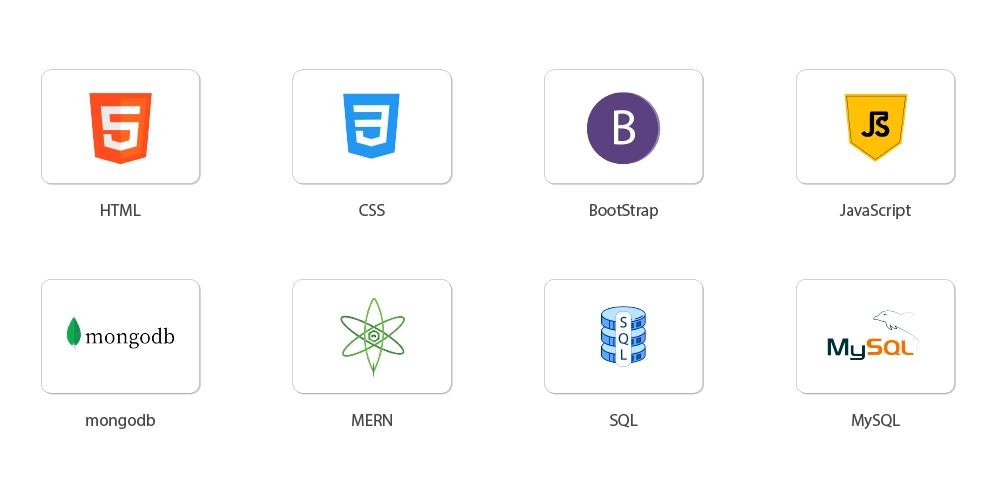
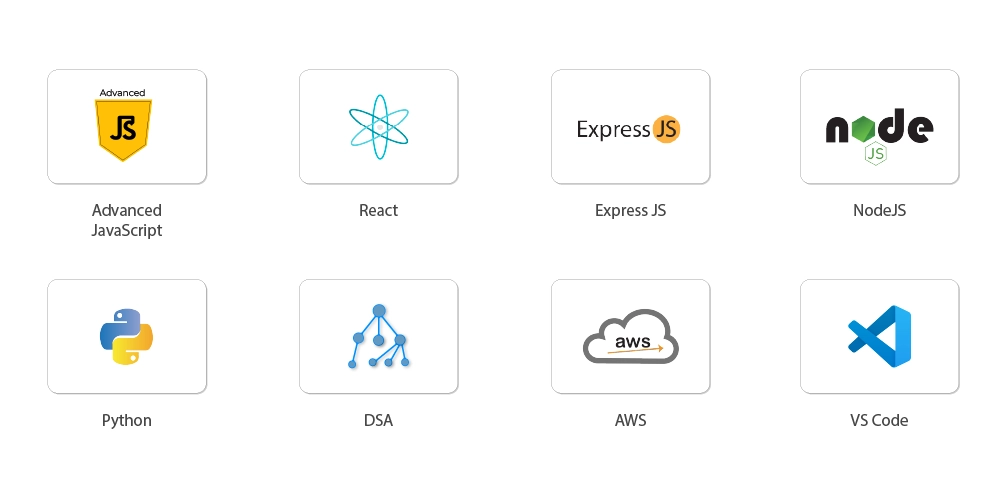
Tools and Technologies You’ll Learn in Full Stack Web Development with MERN
MERN Case Studies
-
MERN at Walmart
 Walmart uses React to create a fast, responsive shopping experience. Node.js and Express.js handle the server and manage orders, while MongoDB stores product and transaction details.
MERN at Uber
 Uber uses Node.js to handle ride requests in real-time. React makes the user interface smooth and interactive. Express.js helps with the back-end processes, and MongoDB stores user data and ride information.
MERN at Medium
 Medium uses React for a clean, responsive blog layout. Node.js and Express.js manage server requests and handle traffic, while MongoDB stores articles, comments, and user data.
 -
MERN at LinkedIn
 LinkedIn uses React to build the user interface for smooth navigation. Node.js and Express.js handle the server-side data, and MongoDB stores user profiles and other information.
MERN at Facebook
 Facebook uses React to create fast, interactive pages. They use Node.js to handle the server-side tasks, and MongoDB stores the data. Express.js helps manage requests between the front and back end.
MERN at Airbnb
 Airbnb uses React for the website’s user interface, allowing users to easily browse listings. Node.js and Express.js handle bookings and data management, while MongoDB stores the user and booking data.
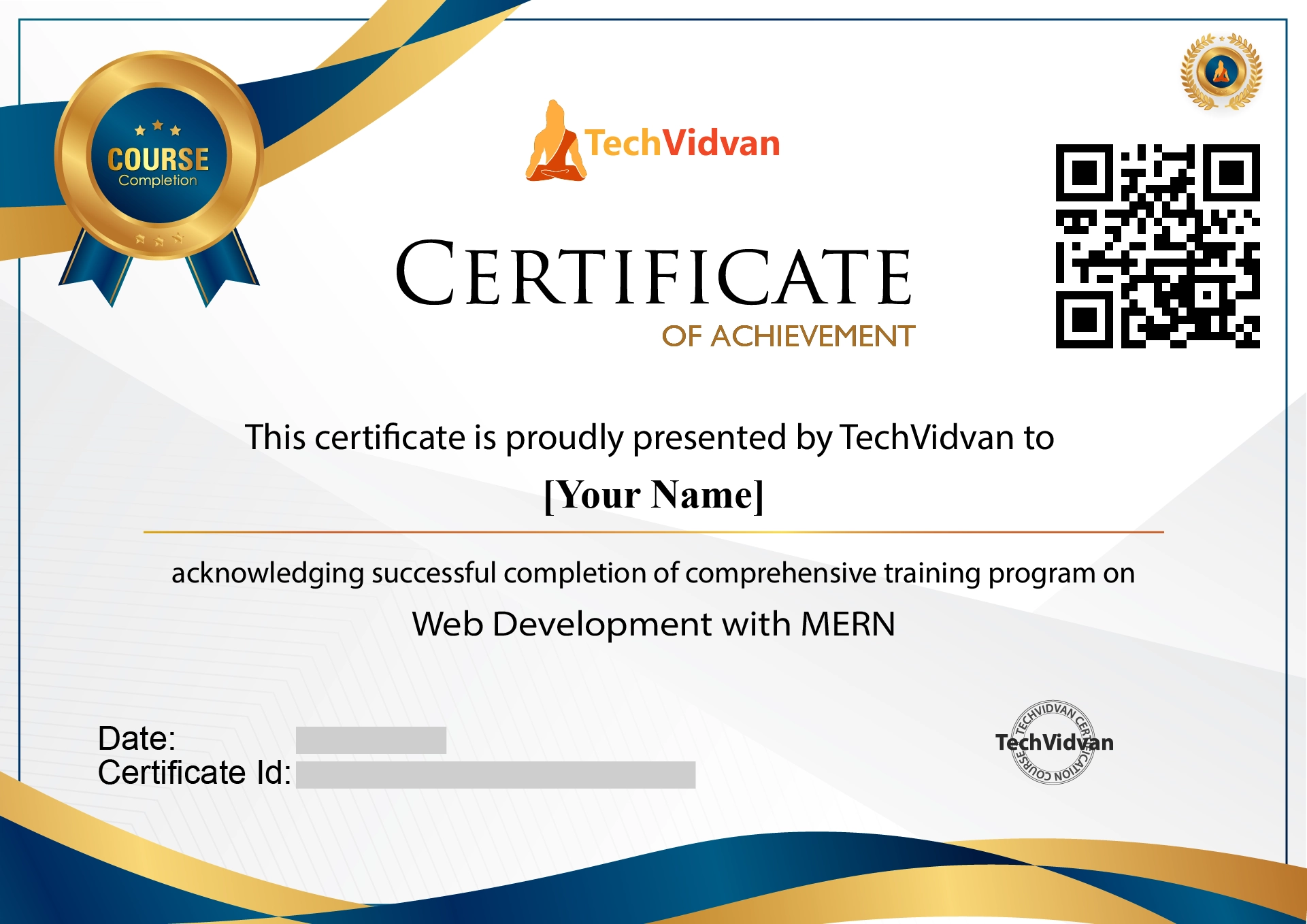
Industry-renowned Certification
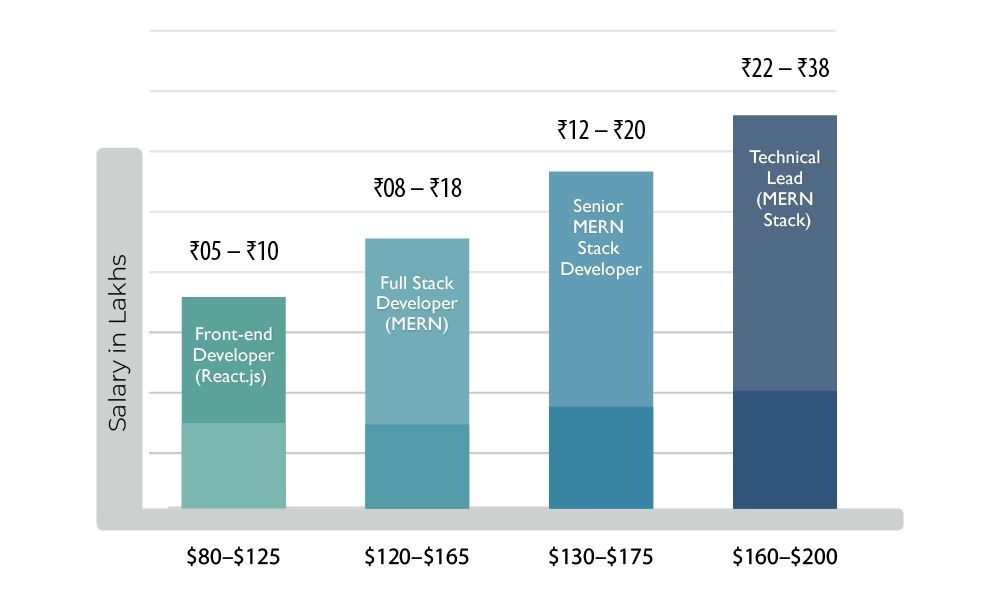
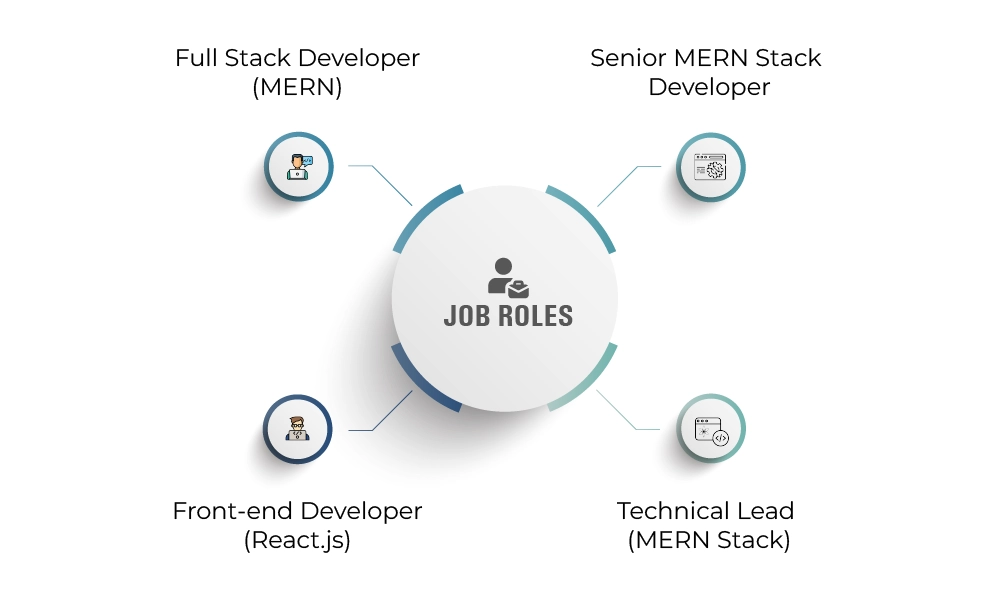
Full Stack MERN Web Development Job Roles
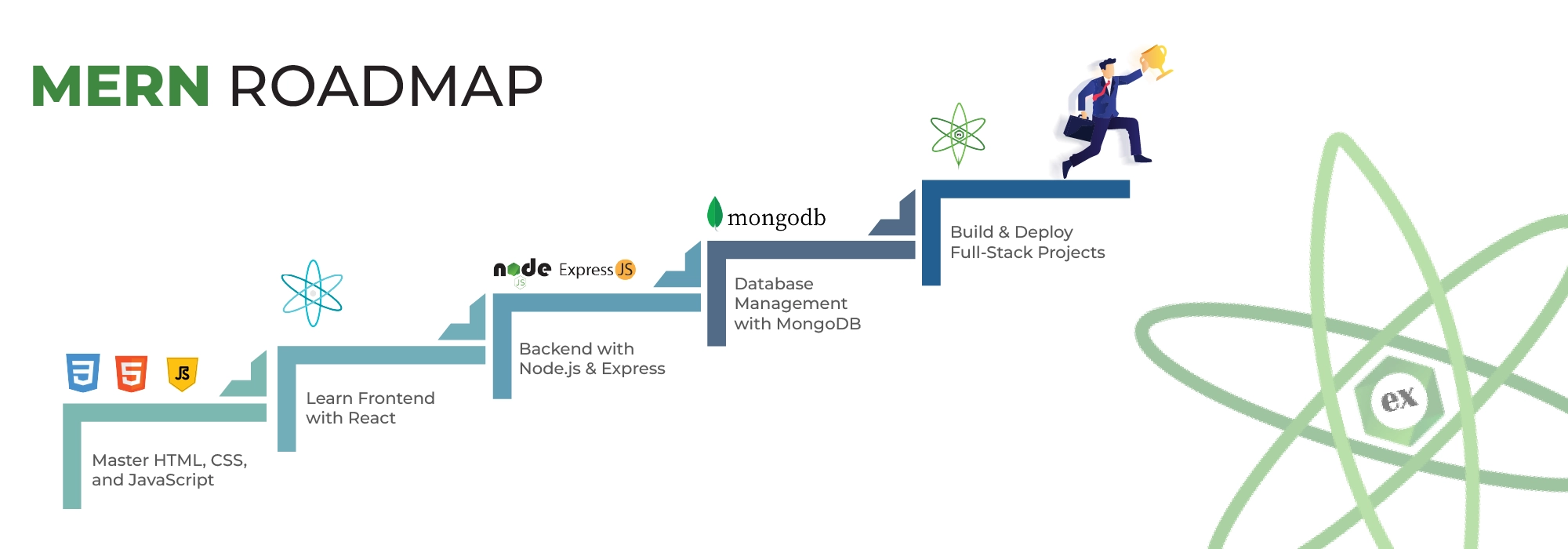
Learning Path of Full Stack MERN Web Development
Learn From Industry’s Best Instructors





TechVidvan’s Career Services


Why Choose TechVidvan? Compare & Decide!
| TechVidvan-DataFlair | Others | |
|---|---|---|
| Cost Efficiency | ✅ Value for money, multiple flexible payment options | Often overpriced or hidden charges |
| Curriculum | ✅ Updated as per industry requirements | Often lagging behind industry trends |
| Real-World Projects | ✅ Hands-on, industry-aligned tasks & case studies | Theoretical, generic, or minimal practical exercises |
| Career Services | ✅ End-to-end résumé building, interview prep, & networking | Basic or nonexistent career help |
| Mentorship & Guidance | ✅ 1:1 mentorship, personalized growth plans | Limited or no dedicated mentorship |
| Job Guarantee | ✅ Structured placement support & assured opportunities | No guarantee or vague placement assistance |
| Instructor Expertise | ✅ Industry-Expert Trainers | Varies Widely |
| Practical-Based Learning | ✅ Hands-On Approach | Theory-Focused |
| Industry-Renowned Certificate | ✅ Globally Recognized | Lesser-Known Certification |
| Placement & Career Support | ✅ Comprehensive Assistance | Minimal Support |
| Doubt Clearing | ✅ Instant live support & Q&A sessions with experts | Forum-based or slow responses |
Full Stack MERN Web Development Course FAQs
A Full Stack Web Developer works on both the front-end and back-end of web applications, managing everything from user interfaces to databases.
The MERN stack, which includes MongoDB, Express.js, React, and Node.js, allows developers to build scalable, high-performance web applications with a single language: JavaScript.
Yes, the MERN stack is popular among beginners due to its JavaScript-based architecture, which is easy to pick up and highly adaptable.
Basic JavaScript knowledge is beneficial, but we also cover fundamental concepts to ensure that new learners can follow along.
MERN developers are highly sought-after for roles in both startups and tech giants due to the flexibility and efficiency of the stack in building modern web applications.
MongoDB’s document-oriented NoSQL database structure pairs well with JavaScript and is ideal for handling large volumes of unstructured data efficiently.
Debugging, managing dependencies, and handling complex databases are some challenges, but our course teaches best practices to tackle them.
Yes, with frameworks like React Native, MERN skills can be adapted for mobile app development, broadening your career options.
React’s component-based structure and efficient DOM handling make it a fast and flexible choice for creating interactive user interfaces.
Node.js enables JavaScript to be used for server-side scripting, allowing full-stack development to be JavaScript-based from client to server.