AI & Data Science Certification Course with AI & ChatGPT

- Earn Industry-recognized IBM certification
- Build real-time projects with industry-aligned tools
- Live Interactive sessions from industry veterans
- Updated curriculum designed for AI-era
- Boost employability with globally recognized IBM credentials

Numbers That Speak Our Success
Success Stories – They Believed, Learned & Achieved!













Our learners are working in leading organizations
Gain industry-ready skills and earn an official certificate from DataFlair and IBM.


Need Personalized Guidance? Talk Directly to Your Instructor

AI & Data Science Course Curriculum
- Overview of Python
- Why Choose Python for Programming?
- What is Python?
- Real-World Applications of Python
- Platform Dependent vs Independent Languages
- Key Features of Python
- Limitations of Python
- The Evolution and History of Python
- Installing Python
- Installing and Setting Up PyCharm
- Introduction to IDLE
- How Python Code is Executed
- Writing and Running the “Hello World” Program
- Python Statements, Indentation, and Comments
- How to Print in Python
- Getting User Input in Python
- Understanding Methods, Identifiers, and Variables
- Python Data Types and Variables
- Rules for Declaring Identifiers
- Input and Output Functions in Python
- Reading Data in a Single Line
- Using the print() Function
- Formatted Print Statements
- The Replacement Operator
- Printing with the format() Method
- Different Types of Operators in Python
- Bitwise Operators in Python
- Arithmetic and Assignment Operators
- Number System Conversion in Python
- Identity Operators
- Writing if-else Statements in Python
- Using if-elif Conditions
- Creating Pyramid Patterns with Control Statements
- Transfer Statements: Break and Continue
- Using the Pass Statement
- Introduction to Loops
- Types of Loops: while and for
- Using Nested Loops
- What Are Strings?
- Built-in String Functions
- String Class and Methods
- Common String Operations
- Type Casting in Python
- Understanding Collections in Python
- Working with Lists, Tuples, Sets, and Frozen Sets
- Using Dictionaries in Python
- Bytes and Bytearray Collections
- Understanding Functions in Python
- Types of Functions and Methods
- Creating Functions in Python
- Parameters and Arguments
- Function Arguments and Call by Value
- Types of Function Arguments
- Returning Values from Functions
- Passing Functions as Arguments
- Global Variables and the global Keyword
- Using the eval() Function
- Writing Recursive Functions
- Implementing Factorial with Recursion
- Reversing Numbers with Recursion
- Fibonacci Series with Recursion
- Anonymous Functions with lambda
- Using the filter() Function with lambda
- lambda with the map() Function
- Introduction to Arrays
- Arrays Operations
- Types and Concepts of Arrays
- Using Arrays in Python
- Array Methods in Python
- Creating Arrays with NumPy
- Comparing Arrays in Python
- Understanding Object References
- Difference Between View and Copy
- Exploring NumPy Array Dimensions and Attributes
- Working with Multidimensional Arrays
- Using Matrices in Python with NumPy
- Implementing Binary Search
- Writing a Bubble Sort Algorithm
- Procedural vs Object-Oriented Programming
- Key Concepts of OOP in Python
- Creating Classes and Objects
- Understanding the self Variable
- Using the __init__() Method
- Constructor Overloading in Python
- Exploring Polymorphism and Operator Overloading
- Relational Operator Overloading
- Overloading vs Overriding in Python
- Using Getters and Setters
- Static Variables and Methods
- Working with Inner Classes
- Understanding Is-A vs Has-A Relationships
- Implementing Inheritance and Using the super() Method
- Types of Inheritance in Python
- Role of Constructors in Multiple Inheritance
- Abstract Classes and Methods
- Creating Interfaces in Python
- Basics of Exception Handling
- Common Exception Types
- Using try, except, and finally Blocks
- Exception Handling with Practical Programs
- Using the finally Statement
- Working with Assertions
- Raising Exceptions in Python
- Writing Custom Exceptions
- Introduction to Files in Python
- File Modes (r+, w+, a+)
- Reading, Writing, and Appending Files
- Using with for File Handling
- Handling File Exceptions
- Writing Data to a File with Practical Programs
- Working with readlines() and writelines() Methods
- Counting Lines, Words, and Characters in a File
- Reading Files Character by Character
- Binary File Operations in Python
- Working with the Pickle Module
- Reading and Writing CSV Files
- Using tell() and seek() Methods
- Core Concepts of NumPy Arrays
- Creating Arrays in NumPy
- Comparing Arrays in NumPy
- Performing Arithmetic Operations on Arrays
- Data Analysis with Pandas
- Working with DataFrames in Pandas
- Inserting, Deleting, and Updating Data in Pandas DataFrames
- Creating Beautiful Graphs with Matplotlib
- Creating Pie Chart, Bar Graphs, Scatter Plots, Histogram, etc.
- Draw Plot using Seaborn
- Work on Bar, Histogram, Scatter and Heatmap Plots.
- What is Statistics
- Importance in Data Science
- Understanding Data
- Types of Statistics: Descriptive vs. Inferential
- Types of Data: Qualitative vs. Quantitative
- Populations vs. Samples
- Central Tendency: Mean, Median, Mode
- Dispersion
- Range, Variance, Standard Deviation
- Coefficient of Variation
- Skewness and Kurtosis
- Understanding Normal Distribution
- Visualization Techniques
- Histograms
- Box Plots
- Bar Charts
- Pie Charts
- Scatter Plots
- Correlation
- Basics of Probability
- Axioms of Probability
- Conditional Probability
- Bayes’ Theorem
- Applications of Bayes’ Theorem
- Random Variables
- Discrete Variables
- Probability Distributions: PMF, PDF and CDF
- Binomial, Poisson, Exponential, Uniform, Log-Normal
- Sampling and Sampling Distributions
- Hypothesis Testing
- Defining Null and Alternative Hypotheses
- Type I and Type II Errors
- Using p-Value and Significance Levels
- Applying Z-test, T-test, Chi-Square Test, and ANOVA
- Confidence Intervals
- Margin of Error
- What is Regression and Its Types
- Root Mean Square Error
- K Nearest Neighbor Algorithm
- Support Vector Machine
- Random Forest Algorithm
- Clustering
- Introduction to Data Science
- The Evolution of Data Science
- Big Data vs. Data Science
- Key Terminologies in Data Science
- Working with NumPy, Pandas & Matplotlib
- Data Science vs. AI and Machine Learning
- Data Science vs. Analytics
- Data Science Applications in the Real World
- Why Data Science is in Demand
- Career Opportunities in Data Science
- How to build a career in Data Science
- Required Skill Set to become a Data Scientist
- AI & Data Science Roadmap
- Salary Trends & Career Growth
- Future of Data Science
- A Real-World Use Case
- Preparing Data for Analysis
- Building a Machine Learning Model
- Making Predictions with the Model
- Delivering Business Value with Data Science
- The Data Science Project Workflow
- Stages of a Data Science Project
- Roles: Data Engineer, Data Scientist, ML Engineer
- Types of Analytics
- Descriptive Analytics
- Diagnostic Analytics
- Predictive Analytics
- Prescriptive Analytics
- Data Science in Finance and Banking
- Data Science in Retail
- Data Science in Healthcare
- Data Science in Logistics and Supply Chain
- Data Science in the Technology Industry
- Data Science in Manufacturing
- Data Science in Agriculture
- What is Exploratory Data Analysis
- Numerical vs Categorical Data
- Continuous vs. Discrete Data
- Feature Engineering
- Handling Missing Values
- Handling Outliers
- Univariate, Bivariate, Multivariate Analysis
- Correlation
- Data Cleaning Essentials
- Business Insights from EDA
- What is Machine Learning?
- How is it Different from AI?
- Why Machine Learning?
- Types of Machine Learning
- Key ML Terminologies
- Features and Labels in ML
- Training and Testing in ML
- Overfitting vs. Underfitting
- The Machine Learning Workflow
- Popular Machine Learning Algorithms
- AI vs ML vs Data Science
- AI & ML Case Studies in Industry
- AI & ML Applications in Real World
- Reinforcement Learning
- Data Science Project Architecture
- Data Science & Engineering Data Flow
- Data Platform Strategy
- Data Ecosystem Project Architecture
- What is Regression in Machine Learning?
- Types of Regression Problems
- Linear Regression
- Evaluation Metrics
- Common Challenges with Regression
- Linear vs Polynomial vs Ridge vs Lasso Regression
- Regression Industry Applications
- Regression Real-World Use Cases
- What is Classification?
- Regression vs. Classification
- Classification Real-World Applications
- Types of Classification Problems
- Data Preparation for Classification
- Label Encoding vs One-Hot Encoding
- Feature Scaling in ML
- Train-Test Split in ML
- Handling Imbalanced Data in Classification
- Model Evaluation Metrics in Classification
- Accuracy in Classification
- Precision, Recall, F1-Score in Classification
- Confusion Matrix in Classification
- ROC Curve and AUC Score in Classification
- Overfitting & Underfitting in ML
- Regularization Techniques in Classification
- What is k-NN?
- How k-NN Works
- KNN Distance Metrics
- Choosing the Right ‘k’ in KNN
- Data Preparation for KNN
- Categorical Features Handling in KNN
- Strengths and Limitations of KNN
- Evaluation Metrics in KNN
- KNN Model Tuning
- Cross-Validation in KNN for Optimal ‘k’
- Introduction to Decision Tree
- Types of Decision Trees
- Components of a Decision Tree
- Decision Tree Splitting Criteria
- Gini Impurity in Decision Tree
- Entropy & Information Gain in Decision Tree N
- Advantages and Limitations of Decision Tree
- Pre-Pruning and Post-Pruning in Decision Tree
- Decision Tree Evaluation Metrics
- Decision Tree Hyperparameter Tuning
- Decision Tree Cross-Validation
- Introduction to Random Forest
- Why use Random Forest over a Single Tree?
- Concepts Behind Random Forest
- How Random Forest Works
- Random Forest Hyperparameters
- Random Forest Advantages and Limitations
- Random Forest Use Cases
- What is unsupervised learning?
- Supervised vs unsupervised learning
- Where to use Unsupervised learning
- Application of Unsupervised learning
- Popular Algorithms in Unsupervised Learning
- Real world use cases of Unsupervised learning
- Evaluation Metrics
- Introduction to Clustering Algorithms
- What is Clustering?
- Differences Between Supervised and Unsupervised Learning
- Classification vs Clustering
- K-means Clustering
- K-means Clustering Real-world industry use cases
- Elbow method in K-means Clustering
- Hierarchical Clustering
- Agglomerative vs Divisive Approach in Hierarchical Clustering
- Hierarchical Clustering Real-world industry use cases
- Dimensionality Reduction
- Enterprise Applications Overview
- Predictive Modeling & Segmentation
- Personalization Engines
- Time Series & Anomaly Detection
- What is Scikit-Learn and Why is it Important?
- Features of Scikit-Learn for Machine Learning
- Installing Scikit-Learn and Setting Up the Environment
- Understanding the Machine Learning Workflow with Scikit-Learn
- What is Natural Language Processing?
- Applications of NLP
- Text Preprocessing
- Text Classification
- Sentiment Analysis
- Introduction to Artificial Intelligence
- Introduction to Gen AI
- What is Deep Learning?
- Definition and its importance in AI.
- Comparison with machine learning.
- Applications of Deep Learning
- Computer vision: Image recognition, object detection.
- Natural language processing: Speech recognition, chatbots.
- Applications in healthcare, finance, and autonomous vehicles.
- Deep Learning vs Machine Learning
- Deep Learning case studies in industry
- Why Deep Learning?
- Need for Deep Learning in Industry
- Why Deep Learning is in Demand
- Key Deep Learning Terminologies
- Basics of neurons, layers, and their roles.
- Activation functions: Sigmoid, ReLU, Tanh.
- Forward propagation and backpropagation.
- CNN
- Activation Functions in Deep Learning
- Optimizers in Deep Learning
- ResNet50
- Vanishing gradients
- Transfer Learning
- DenseNet121
- RNN
- ANN vs CNN vs RNN
- LSTM
- RNN vs LSTM
- LSTM in deep learning
- Real-time implementation with TensorFlow
- Real-time implementation with Keras
- Real-time implementation with PyTorch
- PyTorch vs TensorFlow
- PyTorch Features
- PyTorch Use Cases
- Fully connected networks.
- Convolutional Neural Networks (CNNs) for images.
- Recurrent Neural Networks (RNNs) for sequential data.
Module 1: Introduction to Prompt Engineering
- What is Prompt Engineering?
- Importance in working with AI models like GPT and DALL·E.
- Applications across industries (e.g., content creation, customer support, design).
Module 2: Fundamentals of Prompt Design
- Types of prompts:
- Instruction-based.
- Conversational.
- Contextual.
- Components of effective prompts:
- Clarity, specificity, and relevance.
Module 3: Challenges in Prompt Engineering
- Understanding limitations of AI models.
- Ethical considerations in designing and using pro
Module 1: Introduction to Generative AI
- What is Generative AI?
- Differences between traditional AI and Generative AI.
- Real-world applications:
- Chatbots and conversational AI.
- Image generation (e.g., DALL·E).
- Video synthesis and editing.
Module 2: Fundamentals of Generative AI
- Understanding Generative Models:
- How they create new data.
- Types of Generative AI:
- GANs (Generative Adversarial Networks).
- VAEs (Variational Autoencoders).
- Transformers (foundation of GPT, DALL·E, and other tools).
Module 3: Popular Tools and Frameworks
- Overview of deep learning frameworks
- APIs and tools
- Working with pre-trained models to simplify tasks
- What are Large Language Models?
- Definition and key features.
- Examples: ChatGPT, Bard, Claude, GPT-4.
- Importance of LLMs in AI and Data Science
- Role in modern AI applications.
- Real-world use cases in various industries.
- Fundamentals of LLMs
- How Do LLMs Work?
- Overview of transformer architecture.
- Basics of the attention mechanism.
- Tokenization process.
- Training Large Language Models
- Data preprocessing for LLMs.
- Overview of training datasets (Common Crawl, Wikipedia).
- Applications of LLMs
- Natural Language Processing Tasks
- Emerging Use Cases
- Healthcare, education, and finance.
- Research and scientific discoveries.
- Agentic AI Essentials
- Historical evolution: From reactive systems to proactive agents
- Working with Agentic AI
- Applications of Agentic AI
- Agent vs. Model vs. Tool: Understanding the distinction
- Agentic AI vs AI Agents
- Multi Agent Systems
- Core characteristics of AI agents: autonomy, proactivity, adaptability
- Real-world use cases of AI agents
- Agent architectures
- Open-source agent framework
- Introduction to Data Engineering
- What is Big Data?
- Difference between Big Data and Data Science
- Characteristics of Big Data
- Five Vs
- Importance of Big Data in Today’s World
- Evolution of Big Data and Its Role in Business
- Use Cases of Big Data Across Industries
- What is Hadoop?
- Installation of Hadoop
- Architecture of Hadoop
- Hadoop Ecosystem: Hive, Pig, HBase, and Sqoop
- Working with HDFS and MapReduce
- Setting Up and Navigating HDFS
- Basic HDFS Commands for File Management
- How MapReduce Works
- Introduction to Spark
- RDDs
- Data Processing with PySpark
- Spark SQL
- Introduction to SQL
- SQL Prerequisites
- What is SQL
- Purpose of SQL
- MySQL Server Installation
- SQLYog Installation
- Difference Between DBMS and RDBMS
- SQL Database and Database Server
- Comments in SQL
- What are SQL Commands
- SQL DDL Statements
- SQL DDL Statements – Alter and Drop Command
- Practical Implementation of SQL DDL Command
- SQL DML Statements
- SQL DML Statements – Delete and Update Command
- Practical Implementation of SQL DML Command
- SQL TCL Command
- Practical Implementation of TCL Command
- SQL DCL Command
- Practical Implementation of DCL Command
- What are Data Type in SQL
- String Data Type in SQL
- Numerical Data Type in SQL
- Date Data Type in SQL
- Practical Implementation of Date Data Type in SQL
- What are Operators in SQL
- Arithmetic Operator in SQL
- Relational Operator in SQL
- Logical Operator in SQL
- Practical Implementation of Arithmetic, Relational and Logical Operators
- SQL String Operators
- SQL Like and Not Like Command
- Constraints in SQL
- Practical Implementation of Constraints in SQL
- Order by Clause in SQL
- Practical Implementation of Order by Clause
- GROUP BY and HAVING in SQL
- Practical Implementation of GROUP BY and HAVING in SQL
- Like Command in SQL
- Practical Implementation of Like Command in SQL
- Between and In Command in SQL
- Practical Implementation of Between and In Command
- ANY and ALL Operators
- Alias in SQL
- Practical Implementation of Alias in SQL
- What are Joins in SQL
- Practical Implementation of SQL Joins
- Practical Implementatin of Self Join
- Primary Key and Foreign Key Constraint in SQL
- Practical Implementation of Primary Key and Foreign Key Constraint
- Injection in SQL
- Practical Implementation of Injection
- Null Functions
- Check Constraint in SQL
- Practical Implementation of Check Constraint
- Default Constraint in SQL
- Practical Implementation of Default Constraint
- Null Value in SQL
- Practical Implementations of Null Value in SQL
- Auto Increment in SQL
- Practical Implementation of Auto Increment in SQL
- Aggregate Functions in SQL
- Practical Implementation of Aggregate Functions
- String Functions
- Nested Query in SQL
- Practical Implementation of Nested Query
- SQL Window Function
- Practical Implementation of Window Function
- Bulk Insert in SQL
- Backup and Restore in SQL
- SQL Library Management System Project
- SQL Sales Data Analysis Project
- SQL Restaurant Billing System Project
- SQL Patient Record System Project
- SQL Vehicle Service Booking System Project
- SQL Simple Inventory ans Sales System Project
- SQL Movie Rating System Project
- SQL E-commerce Product Refund and Return Analytics System Project
- What is Business Intelligence
- Stages of Business Intelligence
- Use Cases of BI
- What is Power BI?
- Benefits of using Power BI
- Real-world applications of Power BI
- Various BI Tools
- How to download Power BI Desktop
- Step-by-step installation guide
- Initial setup and configuration
Understanding Power BI components
- Desktop, Service, Mobile
- How these components work together
Power BI Desktop UI
- Introduction to Power BI Desktop
- Installation of Power BI Desktop
- Exploring the Power BI Desktop interface
- Overview of key features and tools
- Navigating through different panes and menus
Identify and Connect to a Data Source
- Types of data sources supported by Power BI
- Choosing the right data source for your needs
Get Data from Flat Files and Relational Data Sources
- Importing data from Excel, CSV, and other flat files
- Connecting to databases like SQL Server, MySQL, and more
Introducing the Power Query Editor and Power Query UI
- What is Power Query?
- Introduction to Power Query Editor
- Navigating the Power Query Editor interface
- Basic features and functionalities
Power Query Ribbon and Different Tabs Introduction
- Overview of the Power Query ribbon
- Understanding different tabs and their functions
Enhance the Structure of the Data and Table Structure
- Organizing and structuring your data tables
- Creating relationships between tables
Profile the Data
- Analyzing data quality
- Identifying and handling data issues
Evaluate and Transform Column Data Types
- Changing data types for accuracy
- Ensuring consistency across your data
Change Data Source Settings
- Updating and managing data source connections
- Handling data source changes efficiently
Identify Fact and Dimension Tables
- Understanding the difference between fact and dimension tables
- Organizing your data for better analysis
Define Relationships and Cardinality
- Creating relationships between tables
- Understanding one-to-many and many-to-many relationships
Design a Data Model Using a Star Schema
- Building a star schema for efficient data analysis
- Benefits of using a star schema in Power BI
Data Modelling and DAX
- Introduction to Relationships
- Creating Relationships
- Cardinality
- Cross-filter direction
- Use of inactive relationships
Introduction of DAX
- Why is DAX used?
- DAX syntax
- DAX functions
- Context in DAX
- Measures using DAX
Create Calculated Tables
- Adding new tables using DAX
- Practical examples of calculated tables
- Learning about table, information, logical, text, iterator,
- Time intelligence functions (YTD, QTD, MTD)
Create Calculated Columns
- Creating columns with custom calculations
- Using DAX for dynamic data manipulation
Create Basic Measures Using DAX
- Understanding measures in Power BI
- Writing simple DAX formulas for calculations
- Date and time functions
Difference Between Calculated Columns and Measures
- When to use calculated columns vs. measures
- Best practices for using DAX in your data model
- DAX advanced features
Create Report from Raw Data
- Starting your first Power BI report
- Importing and organizing your data in reports
Add Visualization Items to Reports
- Inserting charts, graphs, and other visuals
- Customizing visual elements for clarity
Choose an Appropriate Visualization Type
- Selecting the right visual for your data
- Understanding different visualization options
Formatting and Configuring Power BI Charts
- Enhancing the look and feel of your charts
- Using formatting tools effectively
Use a Custom Visual and Import Custom Visuals
- Exploring the Power BI marketplace for custom visuals
- How to import and use custom visuals in your reports
Apply and Customize Themes
- Changing the overall theme of your report
- Creating a consistent look and feel
Configure Conditional Formatting
- Highlighting important data points
- Using color rules to emphasize trends
Apply Sorting
- Sorting data to improve readability
- Techniques for effective data sorting
Apply Slicing and Filtering
- Adding slicers for interactive filtering
- Using filters to focus on specific data
Create Hierarchies
- Building data hierarchies for better navigation
- Using hierarchies to drill down into data
Drilldown/Drillup into Data Using Interactive Visuals
- Exploring data at different levels of detail
- Making your visuals interactive and dynamic
AI Visuals – Q & A, Key Influencers, Decomposition Tree, Smart Narratives
- Utilizing AI-powered visuals for deeper insights
- How to implement and use AI visuals in your reports
Publish Reports
- Sharing your reports with others
- Publishing reports to the Power BI service
Create and Configure a Workspace
- Setting up workspaces for collaboration
- Organizing your projects within workspaces
Assign Workspace Roles
- Managing user roles and permissions
- Ensuring secure access to your data
Configure and Update a Workspace App
- Creating apps for easy access to reports and dashboards
- Updating and maintaining workspace apps
Create Dashboard
- Building your first Power BI dashboard
- Adding and arranging visuals on the dashboard
Manage Tiles on a Dashboard
- Customizing tiles for better presentation
- Organizing tiles for optimal layout
Pin a Live Report Page to a Dashboard
- Linking live report data to your dashboard
- Ensuring real-time data updates on your dashboa
- Introduction to GenAI and its integration with Power BI
- Using Power BI Copilot for report generation and data analysis
- Enhancing dashboards with AI-generated summaries and insights
- Automating data storytelling with natural language narratives
- Real-world use cases of GenAI in business intelligence
- Best practices for using GenAI features responsibly
- Introduction to Interface
- Navigating Sheets and Workbooks
- Ribbon in Excel
- Entering and Editing Data
- Basic Formatting: Fonts, Alignment, Number Formats
- Working with Cell Ranges and Selections
- Saving, Sharing and Collaborating
- Understanding Formulas: Operators and Cell References
- Basic Functions: SUM, AVERAGE, COUNT
- Working with Dates and Times
- Introduction to Logical Functions: IF, AND, OR
- Common Text Functions: CONCATENATE, LEFT, RIGHT, MID
- More on Functions: MIN, MAX, MEDIAN
- Array Formulas Basics
- Error Handling in Formulas
- ISNA and IFERROR Function
- Advanced Sheet Operations
- Jumping Between Sheets
- Mastering Multiple Workbooks
- Hiding and Unhiding Rows and Columns
- Freezing Panes and Splitting Screens
- Conditional Formatting: Highlighting Data
- Creating and Applying Cell Styles
- Working with Tables
- Sorting and Filtering Data
- Charts and Graphs: Creating Visualizations
- Customizing Charts: Formatting and Design
- Sparklines: Visual Data in Cells
- Sorting and Filtering Data: Advanced Techniques
- Working with Pivot Tables: Creating Interactive Reports
- Pivot Charts: Visualizing Pivot Table Data
- What-If Analysis: Goal Seek
- Data Tools in Excel
- Data Validation: Ensuring Data Integrity
- Importing and Exporting Data (CSV, Excel, etc.)
- Lookup Functions: VLOOKUP, INDEX, MATCH, XLOOKUP
- Statistical Functions: COUNTIFS, SUMIFS, AVERAGEIFS, STDEVIFS
- Array Formulas: Working with Ranges of Data
- Financial Functions: PMT, NPV, IRR, FV, PV
- Advanced Text Functions: LEN, PROPER, TRIM, FIND, SEARCH
- Working with Dates and Times (Advanced)
- Advanced Logical Functions
- Introduction to Power Query and Data Import
- Data Cleaning and Transformation
- Adding Columns and Combining Data
- Power Query Automation and Web Scraping
- Loading Data and Best Practices
- Power Pivot in Excel
- Introduction to Excel Automation and Macros
- Getting Started with the VBA Editor (Interface)
- VBA Fundamentals: Variables, Data Types
- Working with Objects: Ranges, Worksheets, and Workbooks
- Automating Tasks & User Interaction
- Debugging, Error Handling, & Macro Security
- Analyze Data Feature: Generating Insights and Visualizations
- Ideas Feature: Formula Suggestions, Data Patterns
- Data from Picture: Extracting Data from Images
- Forecasting with Forecast Sheet: Predicting Future Trends
- Keyboard Shortcuts and Productivity Tips
- Optimizing Performance for Large Datasets
- Planning and Designing Dashboards
- Using PivotTables and PivotCharts for Dynamic Data
- Slicers and Timelines for Interactive Filtering
- Creating Interactive Form Controls
Data Science & AI Projects
-
Detecting Fake News
 You’ll create a program that analyzes news articles and determines if they are true or fake by studying patterns in text data.Credit Card Fraud Detection
 Build a system that examines transaction data and identifies unusual activities to detect fraud in credit card usage.Sentiment Analysis
 Analyze customer reviews or social media comments to identify whether the emotions expressed are positive, negative, or neutral.
 -
Brain Tumor Detection
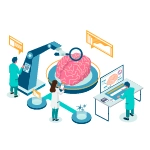 Learn to use data science techniques to analyze medical images and identify brain tumors.Breast Cancer Classification
 Develop a program that classifies breast cancer as malignant or benign by studying patient data and history.Language Translation
 Design a model that translates text from one language to another, making communication across languages seamless.
 -
Movie Recommendation System
 Create a program that suggests movies to people based on their previous choices and preferences, just like Netflix or Amazon Prime.Generate Human Faces
 Build a model that can create realistic human faces from scratch using data, similar to how gaming or animation industries work.Customer Segmentation
 Group customers into categories based on their shopping habits, helping businesses understand and target them better.
 -
Speech Emotion Recognition
 Create a system that listens to spoken words and identifies emotions like happiness, sadness, or anger from the tone of voice.Sales Forecasting
 Predict future sales for a store using past data, helping businesses plan their inventory and strategies.Retail Market Basket Analysis
 Discover which products are frequently bought together to help stores design better offers and improve sales.
Learn From Industry’s Best Instructors


From Learning to Placement – Enroll in our Live AI & Data Science Mastery Batch
Join 1,49,750+ learners enrolled in our AI & Data Science Course – Try before you Buy
Benefits:
- ✓ Live Classes with Expert Mentors
- ✓ Practical-based learning
- ✓ Hands-on Projects & Case Studies
- ✓ Dedicated Job Assistance & Resume Building
- ✓ Lifetime Course Access
Benefits:
- ✓ Everything in Live Online Course, plus:
- ✓ Earn Global IBM certificates
- ✓ Professional-level training from IBM
- ✓ Masterclasses from IBM experts
- ✓ IBM-aligned labs for job-ready output
Enroll in Self-paced AI & Data Science Course
Key Features:
- ✓ Self-paced Expert-led Course
- ✓ Practical-based Curriculum
- ✓ Full Notes + Study Material
- ✓ Real-world Practicals
- ✓ Assessments to Test Skills
- ✓ Interview Ques of Top MNCs
- ✓ Real-time Live Projects
- ✓ Beginner to Advanced
- ✓ 3 years Access Duration
- ✓ Professional Certificate
Key Features:
- ✓ Everything in “PLUS” plus:
- ✓ Job-Ready Skill Training
- ✓ Live Industry Case Studies
- ✓ 1:1 Expert Counselling
- ✓ Dedicated Job Assistance
- ✓ Resume & Interview Prep
- ✓ Additional live Projects
- ✓ Latest Tools/Tech Covered
- ✓ Lifetime Course Access
- ✓ Learn with ChatGPT & AI
Key Features:
- ✓ Everything in “PRO” plus:
- ✓ Global Certification from IBM
- ✓ IBM-aligned curriculum
- ✓ Industry-grade projects
- ✓ Company-wise Interview Ques
- ✓ Pro-level training from IBM
- ✓ Additional Real-time Projects
- ✓ IBM-aligned labs, job-ready output
- ✓ Masterclasses from IBM experts
- ✓ Enhanced Career Opportunities







AI & Data Science Course Objectives
- Data Collection, Analysis, and Interpretation: Students can gather, process, and analyze large, complex datasets to extract meaningful insights.
- Statistical Methods and Data Visualization: Teach statistical techniques and visualization tools essential for interpreting data and effectively communicating findings.
- Programming Languages: Develop proficiency in programming languages such as Python and R, which are critical for data manipulation and analysis.
- Machine Learning and Predictive Modeling: Integrate knowledge of machine learning algorithms and predictive modelling to create models for classification, regression, clustering, and recommendation systems.
- Model Development and Evaluation: Students should be equipped to develop, tune, and validate machine learning models to ensure optimal performance.
- Ethical Data: Practices Instill an understanding of the importance of ethical data management, including data privacy, security, and fairness in data science practices.
- Career readiness: Prepares students for meaningful employment by providing them with the skills and knowledge to drive innovation and solve real-world problems using data.
The overarching goal of the course is to empower students to use data effectively to drive innovation, gain competitive advantages, and address complex challenges across various industries through informed data-driven strategies.
Why should you learn AI & Data Science?
Working with data and making data-driven decisions is invaluable in today’s world. Here are a few compelling reasons why learning Data Science can be a transformative skill:
- Data is the New Currency: As famously stated, data is the “new oil” — a critical resource driving the modern economy.
- Growing Demand: Data Science roles consistently rank among the top-paying jobs worldwide – Glassdoor
- Market Growth: The global Data Science market, valued at over $64 billion in 2022, is overgrowing – Statista
- Business Impact: Data-driven companies see a sixfold increase in customer retention and a significant boost in client acquisition rates – Forrester Research
What is Data Science?
Data Science means extracting information, patterns, and knowledge from raw data. Together, Natural Sciences is an interdisciplinary subject that deals with the data of multiple sciences. Data Science is a multidisciplinary field that applies domain knowledge with the help of statistics and scientific methods to convert raw data into valuable insights that lead to strategic decision-making.
Data Science encompasses various activities, from data collection and preprocessing to advanced machine learning and predictive modeling. Today, we live in a data-rich environment where businesses, governments, and organisations capture lots of data from various sources, such as sensors, websites, and social media. Enter Data Scientists, whose professional job is to sift through the data using statistical methods and machine learning algorithms to determine hidden patterns or trends.
Such insights are massively relevant, helping businesses make critical decisions, streamline operations, and solve challenging problems in industries such as health care and finance.
Data Science emphasizes data as a strategic resource, supporting the widely held notion that “Data is the new oil.” As Big Data technologies and data-gathering tools evolve, the importance of data-driven decision-making continues to grow. Data scientists are in high demand for their analytical skills and ability to communicate findings effectively with both technical and non-technical audiences. Data Science drives innovation and provides a competitive edge across industries.
What to do before you begin?
You just need to learn:
- Strengthen Mathematical Foundations
- Familiarize Yourself with Basic Programming
- Cultivate Curiosity and Analytical Thinking
Who should go for this AI & Data Science course?
Data science training benefits diverse individuals who want to work with data and derive meaningful insights.
- IT Graduates
- Aspiring Analysts
- Statistical Research Enthusiasts
- Data Engineers
- Aspiring Economists
- Business Owners and Entrepreneurs
- Marketers
Whether at the beginning of your career or looking to expand your skill set, Data Science training can open up new and impactful career paths.
By enrolling in our AI & Data Science course, you can expect the following benefits:
- Expand Career Opportunities: Opens doors to diverse job prospects in industries with high demand for data expertise.
- Offers Practical Experience: Engage in real-world data projects that build hands-on experience and a professional portfolio.
- Improves Data Manipulation and Analysis: Strengthen your ability to handle and interpret data efficiently.
- Introduces Industry Standard Tools and Languages: Gain proficiency in widely used software and programming languages like Python and R.
- Builds a Professional Network: Connect with peers and industry professionals to foster valuable relationships.
- Addresses Complex Business Challenges: Learn to apply data solutions to significant business problems.
- Boosts Earning Potential and Marketability: Increase your value in the job market with in-demand data science skills.
Jobs after Learning this AI & Data Science Course
The AI & Data Science field offers a variety of career opportunities for those with the right skills.
Here are some roles:
- Data Consultant
- AI/ML Researcher
- Data Product Manager
- Healthcare Data Analyst
- Machine Learning Engineer
- Business Intelligence Analyst
- Data Engineer
- Quantitative Analyst (Quant)
Our students are working in leading organizations
AI & Data Science Case Studies
-
Data Science at Netflix
 Netflix uses data science to understand what people watch. It suggests shows and movies that match their interests, making it easier to find something they’ll enjoy.Data Science at Facebook
 Facebook uses data science to learn how people connect and share. It helps show posts and ads that are most useful or interesting to each person.Data Science at Flipkart
 Flipkart uses data science to predict what customers might want to buy. It helps suggest products and keeps stock ready for a smooth shopping experience.
 -
Data Science in Retail
 Retail stores use data science to see what customers like to buy and when. It helps plan product placement and create better shopping deals for customers.Data Science in Digital Marketing
 Digital marketers use data science to track customer behavior and improve ads. It ensures people see the right ads and companies get better results.Data Science in Healthcare
 Data science helps doctors understand patient data, predict illnesses, and improve treatment. It makes healthcare more accurate and effective.
 -
Data Science in Education
 Schools use data science to track how students are doing. It helps find learning gaps and improve teaching methods and students learning.Data Science in Movies & Entertainment
 The movie industry uses data science to understand what audiences like. It helps make better movies and predict which ones will do well.
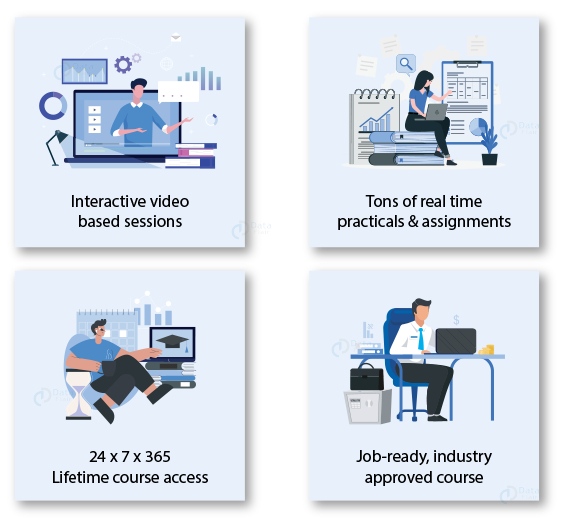
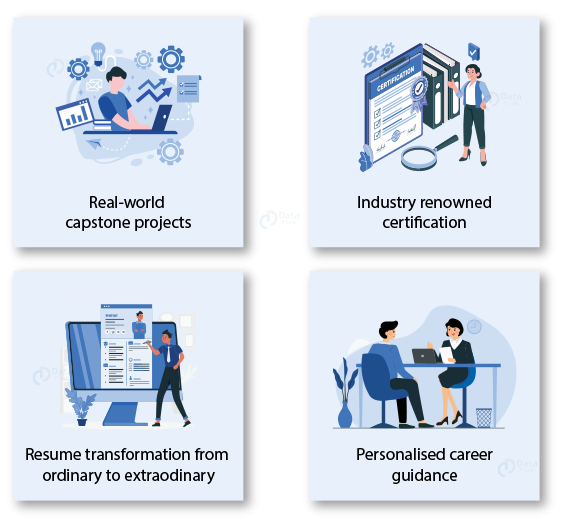
Features of AI & Data Science Course
Looking for Industry Expert Counselling?
We are a team of trainers who have 20+ years of Industry Experience. They provide project based training and cover real time scenarios during the interactive training sessions.
Contact our Industry Experts & get answers to all your queries.
AI & Data Science Online Training FAQs
As the name suggests, data science is a field that combines science-based methods, principles, and knowledge from various disciplines to extract meaningful information from (structured and unstructured) data. It is essential because it allows businesses to make informed decisions based on data, solve complex problems, and gain a competitive advantage.
This AI & Data Science course can benefit anyone interested in working with data, including students, professionals from various industries like IT, finance, and healthcare, and those looking to change careers.
The AI & Data Science course covers data analysis, visualization, statistical analysis, machine learning, programming (primarily in Python), and domain knowledge. It also emphasizes critical thinking and problem-solving skills.
The duration is flexible and depends on your pace. Our AI & Data Science course is designed to accommodate your schedule, allowing you to learn at a comfortable speed.
While a background in programming and mathematics, especially statistics, is helpful, our course includes introductory modules to help beginners build these essential skills.
Graduates can pursue roles such as data scientist, machine learning engineer, business intelligence analyst, and more. There’s a high demand for data professionals across many industries.
Yes, the course features practical assignments that require you to work with accurate data to solve real-world problems. These projects are valuable for building a portfolio that showcases your skills to employers.
While not mandatory, having basic knowledge of programming and mathematics (algebra and statistics) is beneficial. The AI & Data Science course is beginner-friendly and designed to build foundational skills.