AI & Machine Learning Certification Course with AI & ChatGPT

- Earn Industry-recognized IBM certification
- Build real-time projects with industry-aligned tools
- Live Interactive sessions from industry veterans
- Updated curriculum designed for AI-era
- Boost employability with globally recognized IBM credentials
Numbers That Speak Our Success
Success Stories – They Believed, Learned & Achieved!













Our learners are working in leading organizations
Gain industry-ready skills and earn an official certificate from DataFlair and IBM.


Need Personalized Guidance? Talk Directly to Your Instructor

Full Stack AI and Machine Learning Course Curriculum
- Overview of Python
- Why Choose Python for Programming?
- What is Python?
- Real-World Applications of Python
- Platform Dependent vs Independent Languages
- Key Features of Python
- Limitations of Python
- The Evolution and History of Python
- Installing Python
- Installing and Setting Up PyCharm
- Introduction to IDLE
- How Python Code is Executed
- Writing and Running the “Hello World” Program
- Python Statements, Indentation, and Comments
- How to Print in Python
- Getting User Input in Python
- Understanding Methods, Identifiers, and Variables
- Python Data Types and Variables
- Rules for Declaring Identifiers
- Input and Output Functions in Python
- Reading Data in a Single Line
- Using the print() Function
- Formatted Print Statements
- The Replacement Operator
- Printing with the format() Method
- Different Types of Operators in Python
- Bitwise Operators in Python
- Arithmetic and Assignment Operators
- Number System Conversion in Python
- Identity Operators
- Writing if-else Statements in Python
- Using if-elif Conditions
- Creating Pyramid Patterns with Control Statements
- Transfer Statements: Break and Continue
- Using the Pass Statement
- Introduction to Loops
- Types of Loops: while and for
- Using Nested Loops
- What Are Strings?
- Built-in String Functions
- String Class and Methods
- Common String Operations
- Type Casting in Python
- Understanding Collections in Python
- Working with Lists, Tuples, Sets, and Frozen Sets
- Using Dictionaries in Python
- Bytes and Bytearray Collections
- Understanding Functions in Python
- Types of Functions and Methods
- Creating Functions in Python
- Parameters and Arguments
- Function Arguments and Call by Value
- Types of Function Arguments
- Returning Values from Functions
- Passing Functions as Arguments
- Global Variables and the global Keyword
- Using the eval() Function
- Writing Recursive Functions
- Implementing Factorial with Recursion
- Reversing Numbers with Recursion
- Fibonacci Series with Recursion
- Anonymous Functions with lambda
- Using the filter() Function with lambda
- lambda with the map() Function
- Introduction to Arrays
- Arrays Operations
- Types and Concepts of Arrays
- Using Arrays in Python
- Array Methods in Python
- Creating Arrays with NumPy
- Comparing Arrays in Python
- Understanding Object References
- Difference Between View and Copy
- Exploring NumPy Array Dimensions and Attributes
- Working with Multidimensional Arrays
- Using Matrices in Python with NumPy
- Implementing Binary Search
- Writing a Bubble Sort Algorithm
- Procedural vs Object-Oriented Programming
- Key Concepts of OOP in Python
- Creating Classes and Objects
- Understanding the self Variable
- Using the __init__() Method
- Constructor Overloading in Python
- Exploring Polymorphism and Operator Overloading
- Relational Operator Overloading
- Overloading vs Overriding in Python
- Using Getters and Setters
- Static Variables and Methods
- Working with Inner Classes
- Understanding Is-A vs Has-A Relationships
- Implementing Inheritance and Using the super() Method
- Types of Inheritance in Python
- Role of Constructors in Multiple Inheritance
- Abstract Classes and Methods
- Creating Interfaces in Python
- Basics of Exception Handling
- Common Exception Types
- Using try, except, and finally Blocks
- Exception Handling with Practical Programs
- Using the finally Statement
- Working with Assertions
- Raising Exceptions in Python
- Writing Custom Exceptions
- Introduction to Files in Python
- File Modes (r+, w+, a+)
- Reading, Writing, and Appending Files
- Using with for File Handling
- Handling File Exceptions
- Writing Data to a File with Practical Programs
- Working with readlines() and writelines() Methods
- Counting Lines, Words, and Characters in a File
- Reading Files Character by Character
- Binary File Operations in Python
- Working with the Pickle Module
- Reading and Writing CSV Files
- Using tell() and seek() Methods
- Core Concepts of NumPy Arrays
- Creating Arrays in NumPy
- Comparing Arrays in NumPy
- Performing Arithmetic Operations on Arrays
- Data Analysis with Pandas
- Working with DataFrames in Pandas
- Inserting, Deleting, and Updating Data in Pandas DataFrames
- Creating Beautiful Graphs with Matplotlib
- Creating Pie Chart, Bar Graphs, Scatter Plots, Histogram, etc.
- Draw Plot using Seaborn
- Work on Bar, Histogram, Scatter and Heatmap Plots.
- What is Statistics
- Importance in Data Science
- Understanding Data
- Types of Statistics: Descriptive vs. Inferential
- Types of Data: Qualitative vs. Quantitative
- Populations vs. Samples
- Central Tendency: Mean, Median, Mode
- Dispersion
- Range, Variance, Standard Deviation
- Coefficient of Variation
- Skewness and Kurtosis
- Understanding Normal Distribution
- Visualization Techniques
- Histograms
- Box Plots
- Bar Charts
- Pie Charts
- Scatter Plots
- Correlation
- Basics of Probability
- Axioms of Probability
- Conditional Probability
- Bayes’ Theorem
- Applications of Bayes’ Theorem
- Random Variables
- Discrete Variables
- Probability Distributions: PMF, PDF and CDF
- Binomial, Poisson, Exponential, Uniform, Log-Normal
- Sampling and Sampling Distributions
- Hypothesis Testing
- Defining Null and Alternative Hypotheses
- Type I and Type II Errors
- Using p-Value and Significance Levels
- Applying Z-test, T-test, Chi-Square Test, and ANOVA
- Confidence Intervals
- Margin of Error
- What is Regression and Its Types
- Root Mean Square Error
- K Nearest Neighbor Algorithm
- Support Vector Machine
- Random Forest Algorithm
- Clustering
- What is Machine Learning?
- How is it Different from AI?
- Types of Machine Learning
- Key ML Terminologies
- Working with NumPy, Pandas & Matplotlib
- Features and Labels in ML
- Training and Testing in ML
- Overfitting vs. Underfitting
- Mathematical Foundations
- Algorithm Survey & Use Cases
- The Machine Learning Workflow
- Popular Machine Learning Algorithms
- Reinforcement Learning
- Types of Analytics
- Descriptive Analytics
- Diagnostic Analytics
- Predictive Analytics
- Prescriptive Analytics
- Machine Learning in Finance and Banking
- Machine Learning in Retail
- Machine Learning in Healthcare
- Machine Learning in Logistics and Supply Chain
- Machine Learning in the Technology Industry
- Machine Learning in Manufacturing
- Machine Learning in Agriculture
- Introduction to Regression
- Regression Real-World Use Cases
- Types of Regression Problems
- Linear Regression
- Evaluation Metrics
- Common Challenges with Regression
- Linear vs Polynomial vs Ridge vs Lasso Regression
- Regression Industry Applications
- What is Classification?
- Regression vs. Classification
- Classification Real-World Applications
- Types of Classification Problems
- Data Preparation for Classification
- Label Encoding vs One-Hot Encoding
- Feature Scaling in ML
- Train-Test Split in ML
- Handling Imbalanced Data in Classification
- Model Evaluation Metrics in Classification
- Accuracy in Classification
- Precision, Recall, F1-Score in Classification
- Confusion Matrix in Classification
- ROC Curve and AUC Score in Classification
- Overfitting & Underfitting in ML
- Regularization Techniques in Classification
- What is k-NN?
- How k-NN Works
- KNN Distance Metrics
- Choosing the Right ‘k’ in KNN
- Data Preparation for KNN
- Categorical Features Handling in KNN
- Strengths and Limitations of KNN
- Evaluation Metrics in KNN
- KNN Model Tuning
- Cross-Validation in KNN for Optimal ‘k’
- Introduction to Decision Tree
- Types of Decision Trees
- Components of a Decision Tree
- Decision Tree Splitting Criteria
- Gini Impurity in Decision Tree
- Entropy & Information Gain in Decision Tree N
- Advantages and Limitations of Decision Tree
- Pre-Pruning and Post-Pruning in Decision Tree
- Decision Tree Evaluation Metrics
- Decision Tree Hyperparameter Tuning
- Decision Tree Cross-Validation
- Introduction to Random Forest
- Why use Random Forest over a Single Tree?
- Concepts Behind Random Forest
- How Random Forest Works
- Random Forest Hyperparameters
- Random Forest Advantages and Limitations
- Random Forest Use Cases
- What is unsupervised learning?
- Supervised vs unsupervised learning
- Where to use Unsupervised learning
- Application of Unsupervised learning
- Popular Algorithms in Unsupervised Learning
- Real world use cases of Unsupervised learning
- Evaluation Metrics
- Introduction to Clustering Algorithms
- What is Clustering?
- Differences Between Supervised and Unsupervised Learning
- Classification vs Clustering
- K-Means Clustering
- K-means Clustering Real-world industry use cases
- Elbow method in K-means Clustering
- Hierarchical Clustering
- Agglomerative vs Divisive Approach in Hierarchical Clustering
- Hierarchical Clustering Real-world industry use cases
- Dimensionality Reduction
- Enterprise Applications Overview
- Predictive Modeling & Segmentation
- Personalization Engines
- Time Series & Anomaly Detection
- What is Scikit-Learn and Why is it Important?
- Features of Scikit-Learn for Machine Learning
- Installing Scikit-Learn and Setting Up the Environment
- Understanding the Machine Learning Workflow with Scikit-Learn
- Deep Learning vs Machine Learning
- Deep Learning Introduction
- Deep Learning Case Studies in Industry
- Why Deep Learning?
- Need for Deep Learning in Industry
- Why Deep Learning is in Demand
- Key Deep Learning Terminologies
- What is Artificial Neural Networks
- History of Deep Learning
- Applications of Deep Learning
- Convolutional Neural Networks
- Activation Functions in Deep Learning
- Optimizers in Deep Learning
- ResNet50
- Vanishing gradients
- Transfer Learning
- DenseNet121
- Recurrent Neural Networks
- ANN vs CNN vs RNN
- LSTM
- RNN vs LSTM
- LSTM in deep learning
- Deep learning architectures: perceptron, feedforward neural networks
- Activation functions and network initialization
- Backpropagation algorithm and training neural networks
- Optimization techniques for deep learning: Adam, RMSprop, etc.
- Perceptron & Feedforward Designs
- Activation & Initialization
- Backpropagation & Optimizers
- Introduction to CNNs for image analysis
- Convolution and pooling layers
- Object detection and image segmentation
- Transfer learning with pre-trained CNNs
- RNN fundamentals: architecture, hidden states, and memory cells
- Long Short-Term Memory (LSTM) and Gated Recurrent Units (GRUs)
- Sequence generation and language modeling
- Applications of RNNs: text generation, machine translation, speech recognition
- What is OpenCV?
- Installing OpenCV Using pip
- Setting Up OpenCV in PyCharm
- How to Install and Use OpenCV in PyCharm
- Using imread() and imwrite() Functions to Load and Save Images
- Getting OpenCV Suggestions in PyCharm
- Displaying Images in OpenCV
- Resizing Images with OpenCV
- Rotating Images in OpenCV
- Merging Multiple Images
- Flipping Images Using Bitwise NOT in OpenCV
- Changing Image Colors with cvtColor() in OpenCV
- Capturing Video with OpenCV
- Recording Video from Webcam
- Drawing Lines on Images and Videos
- Drawing Circles on Images
- Adding Text to Images in OpenCV
- Difference Between add() and addWeighted() Functions
- Working with Image Properties (Shape & Size)
- Cropping Images with OpenCV
- Using hconcat() and vconcat() for Image Concatenation
- Blurring Images in OpenCV
- Creating a Graphical Image Rotation App with Tkinter
- Showing Multiple Dynamic Images with Tkinter
- Dynamically Resizing Images Using Tkinter
- Basic Video Operations with Dialog Box in OpenCV
- Resizing Videos and Images with Specified Dimensions
- Drawing Various Shapes in OpenCV
- Applying Image Transformations in OpenCV
- Converting BGR Images to RGB in OpenCV
- Using Different Color Codes in OpenCV
- Detecting Edges Using Canny Edge Detection in OpenCV
- What is Natural Language Processing?
- Applications of NLP
- Text Preprocessing
- Text Classification
- Sentiment Analysis
- Introduction to Artificial Intelligence
- Introduction to Gen AI
- Agentic AI Essentials
- Historical evolution: From reactive systems to proactive agents
- Working with Agentic AI
- Applications of Agentic AI
- Agent vs. Model vs. Tool: Understanding the distinction
- Agentic AI vs AI Agents
- Multi Agent Systems
- Core characteristics of AI agents: autonomy, proactivity, adaptability
- Real-world use cases of AI agents
- Agent architectures
- Open-source agent frameworks
Machine Learning Projects
-
Customer Lifetime Value (CLV) Prediction
 Estimate the total worth of a customer over their entire relationship using advanced regression techniques.Fraud Detection in Financial Transactions
 Detect anomalies and fraudulent patterns in financial transaction datasets using Isolation Forests and Autoencoders.Churn Prediction with Survival Analysis
 Predict when a customer is likely to churn using survival analysis techniques instead of traditional classification.
 -
Anomaly Detection in Network Traffic
 Detect unusual patterns and potential cyberattacks in network traffic using clustering and statistical models.Credit Card Spend Analysis and Segmentation
 Cluster customers based on their spending habits to personalize offers and marketing strategies.Sentiment Analysis
 Analyze social media text to gauge customer opinions using NLP pipelines.
 -
Earthquake Prediction
 Create an earthquake prediction model using machine learning to predict seismic activities based on historical data and pattern recognition.Pneumonia Detection
 Implement a Convolutional Neural Network (CNN) to detect pneumonia from chest X-ray images, using deep learning for medical image analysis.Detecting Fake News
 Build a machine learning model to classify news articles as real or fake, using NLP techniques to analyze the content and detect misleading information.
Learn From Industry’s Best Instructors


From Learning to Placement – Enroll in our Live AI & Machine Learning Mastery Batch
Join 1,49,950+ learners enrolled in our AI & Machine Learning Course – Try before you Buy
Benefits:
- ✓ Live Classes with Expert Mentors
- ✓ Practical-based learning
- ✓ Hands-on Projects & Case Studies
- ✓ Dedicated Job Assistance & Resume Building
- ✓ Lifetime Course Access
Benefits:
- ✓ Everything in Live Online Course, plus:
- ✓ Earn Global IBM certificates
- ✓ Professional-level training from IBM
- ✓ Masterclasses from IBM experts
- ✓ IBM-aligned labs for job-ready output
Enroll in Self-paced AI & Machine Learning Course
Key Features:
- ✓ Self-paced Expert-led Course
- ✓ Practical-based Curriculum
- ✓ Full Notes + Study Material
- ✓ Real-world Practicals
- ✓ Assessments to Test Skills
- ✓ Interview Ques of Top MNCs
- ✓ Real-time Live Projects
- ✓ Beginner to Advanced
- ✓ 3 years Access Duration
- ✓ Professional Certificate
Key Features:
- ✓ Everything in “PLUS” plus:
- ✓ Job-Ready Skill Training
- ✓ Live Industry Case Studies
- ✓ 1:1 Expert Counselling
- ✓ Dedicated Job Assistance
- ✓ Resume & Interview Prep
- ✓ Additional live Projects
- ✓ Latest Tools/Tech Covered
- ✓ Lifetime Course Access
- ✓ Learn with ChatGPT & AI
Key Features:
- ✓ Everything in “PRO” plus:
- ✓ Global Certification from IBM
- ✓ IBM-aligned curriculum
- ✓ Industry-grade projects
- ✓ Company-wise Interview Ques
- ✓ Pro-level training from IBM
- ✓ Additional Real-time Projects
- ✓ IBM-aligned labs, job-ready output
- ✓ Masterclasses from IBM experts
- ✓ Enhanced Career Opportunities





AI and Machine Learning Course Objectives
By the end of this Machine Learning course, you will:
- Understand the Core Concepts of Machine Learning: Learn what it is, how it works, and why it’s used in almost every industry today.
- Master Key Machine Learning Algorithms: Get hands-on experience with popular algorithms like Linear Regression, Decision Trees, K-Nearest Neighbours, and more.
- Work with Real-World Data: Learn how to collect, clean, and prepare messy data for building accurate and reliable ML models.
- Develop Practical Problem-Solving Skills: Apply Machine Learning techniques to real-life scenarios, such as sales prediction, customer segmentation, fraud detection, and more.
- Build and Evaluate Machine Learning Models: Understand how to train models, measure their performance, and improve accuracy using practical tools and libraries like Python, Pandas, and Scikit-Learn.
This AI / ML course is about making you industry-ready with skills you can apply immediately after learning.
Why should you learn AI and Machine Learning?
Machine Learning (ml) is no longer just a trending topic—it’s a skill that companies worldwide are actively hiring for. ML is behind everything, whether it’s predicting customer behavior, detecting fraud, or powering self-driving cars.
In this Machine Learning course, you will:
- Learn Machine Learning from Scratch: There is no complicated jargon. We start with the basics and gradually move to advanced topics.
- Practice with Real-World Datasets: You’ll work on actual problems and understand how things work in real life.
- Develop Job-Ready Skills: The concepts and tools taught here are directly used in industries today.
- Boost Your Career Growth: Adding Machine Learning skills to your profile can open doors to exciting job opportunities and better salaries.
This course is the perfect place to start if you want to learn how smart technologies work and build solutions that have a real impact.
What is Machine Learning?
Machine Learning is like allowing computers to learn from experience, just like humans do. Instead of writing step-by-step instructions, we feed machines lots of data, and they figure out patterns independently. Over time, they get better at solving problems, making decisions, and even predicting future outcomes—all without being explicitly programmed for each task.
Think about how YouTube recommends videos you’ll probably enjoy, or how your email filters out spam automatically. These are real-life examples of Machine Learning quietly working in the background.
Here’s Why Machine Learning Is Everywhere Today:
- Over 97% of major companies use Machine Learning to improve their services and stay ahead.
- The Machine Learning industry is expected to cross $225 billion by 2030, creating massive career opportunities.
- ML is the technology shaping the future, from healthcare and finance to entertainment and self-driving cars.
With Machine Learning, you’re not just working with code—you’re teaching machines how to learn and improve over time. Whether you want to predict customer behavior, detect fraud, or build intelligent apps, Machine Learning opens the door to exciting and impactful innovations.
Are you ready to explore how machines can learn and make life smarter? This is your first step into the world of intelligent technology!
What to do before you begin?
This AI and Machine Learning course is built for curious minds—whether you’re a college student exploring career options, a working professional aiming to upskill, or someone completely new to this field. To keep things smooth and enjoyable, it helps if you have:
- Some Programming Experience: You don’t need to be a coding expert, but knowing the basics of Python or any other language will make it easier to follow along with hands-on exercises.
- Comfort with Basic Math: High school-level math, like simple algebra, probability, and basic statistics, is enough. Don’t worry, we’ll connect the dots when these concepts arise!
- A Problem-Solving Mindset: If you enjoy finding patterns, solving puzzles, or asking “why” and “how,” you’re already thinking like a Machine Learning professional.
No prior experience in Machine Learning is required. We’ll start with the basics and gradually build your knowledge, focusing on practical skills you can apply immediately.
If you bring your curiosity, we’ll get the clarity!
Who should go for this AI and Machine Learning course?
This course is open to anyone interested in learning Machine Learning. You don’t need to be a tech expert or have an advanced background. Just basic computer knowledge and a desire to learn are enough!
- College Students: Want to explore the world of AI and Machine Learning early? Start here.
- Working Professionals: Looking to upgrade your skills for better job opportunities? This course will help.
- Complete Beginners: You can easily follow along even if you’re new to programming or data.
- Career Switchers: Coming from a non-technical field? No problem! We start from the basics and grow your skills step by step.
If you’re curious about how technology makes smart decisions and want to learn these skills, this AI / ML course is for you.
By enrolling in our AI and Machine Learning course, you can expect the following benefits:
- Learn Machine Learning the Practical Way: Forget just theory—you’ll work on real projects using real datasets, so you understand how ML works in real-world situations.
- Start from Basics, Grow to Advanced: Whether you’re a beginner or have some knowledge, this course takes you from simple concepts to advanced techniques.
- Industry-Relevant Tools and Techniques: Learn the exact tools (like Python, Pandas, and Scikit-Learn) and methods used by professionals in top companies.
- Boost Your Career Opportunities: With Machine Learning skills in your toolkit, you become eligible for high-demand roles like Data Analyst, ML Engineer, and AI Specialist.
- Certificate of Completion: Earn a certificate to showcase your skills and boost your resume for better job prospects.
If you want valuable, future-proof, and in-demand skills, this Machine Learning course delivers precisely that.
Jobs after Learning this AI and Machine Learning Course
Completing this Machine Learning course will open doors to some of the most in-demand and well-paying roles in the tech industry. Companies across sectors like finance, healthcare, e-commerce, and entertainment are actively hiring skilled Machine Learning professionals.
Here are the top career options you can explore:
- Machine Learning Engineer: Create innovative systems that can learn from data and make decisions like humans do.
- Data Scientist: Work with large amounts of data to find functional patterns and help companies make better choices based on facts, not guesses.
- AI/ML Developer: Build intelligent apps and tools that use Machine Learning and AI to make everyday tasks easier and more efficient.
- Data Analyst: Work with data to identify patterns, create reports, and support business strategies.
- Business Intelligence (BI) Analyst: Help organisations make informed decisions by analysing market trends and business data.
- Research Analyst: Explore new ways to apply ML techniques in cutting-edge research and development projects.
With Machine Learning skills, you’re not limited to the tech industry—your expertise will be valued across every sector looking to innovate and grow.
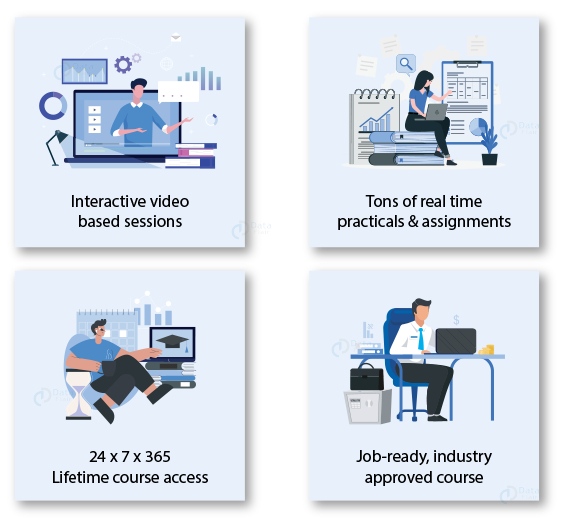
Features of AI & Machine Learning Course
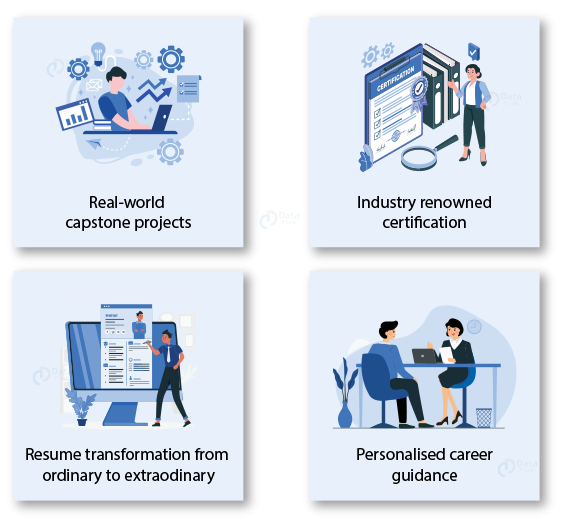
Looking for Industry Expert Counselling?
We are a team of trainers who have 20+ years of Industry Experience. They provide project based training and cover real time scenarios during the interactive training sessions.
Contact our Industry Experts & get answers to all your queries.
AI and Machine Learning Course FAQs
Basic knowledge of any programming language, especially Python, is helpful but not mandatory. We’ll guide you through the coding essentials needed for Machine Learning.
Yes! This Machine Learning course is designed for beginners. We start from the basics and gradually cover advanced topics, making it easy to follow even if you’re new to this field.
Absolutely! You’ll work on real-world datasets and practical projects to understand how Machine Learning is applied in industries.
You’ll learn Python, Pandas, NumPy, Scikit-Learn, and basic concepts of data visualization using libraries like Matplotlib.
Yes, you will receive a certificate of completion, which you can add to your resume and LinkedIn profile to showcase your skills.
You’ll work on projects like predicting house prices, customer segmentation, sales forecasting, and basic fraud detection models.
Yes, non-technical students can join. We focus on building concepts from scratch and explain everything in simple language.
You’ll gain practical skills that employers highly value. With Machine Learning knowledge, you can explore job roles in data science, analytics, and AI development.
This is a practical, hands-on course. While we explain the theory behind concepts, the primary focus is implementation and solving real-world problems.
We provide dedicated support to answer your queries and help you move forward smoothly throughout your learning journey.