Spring Boot Certification Course with AI & ChatGPT
- Gain practical knowledge which industry needs
- Build real-time projects with industry-aligned tools
- Interactive sessions from industry veterans
- Updated curriculum designed for AI-era
- Guaranteed placement support with our career services

Numbers That Speak Our Success
Success Stories – They Believed, Learned & Achieved!













Our learners are working in leading organizations
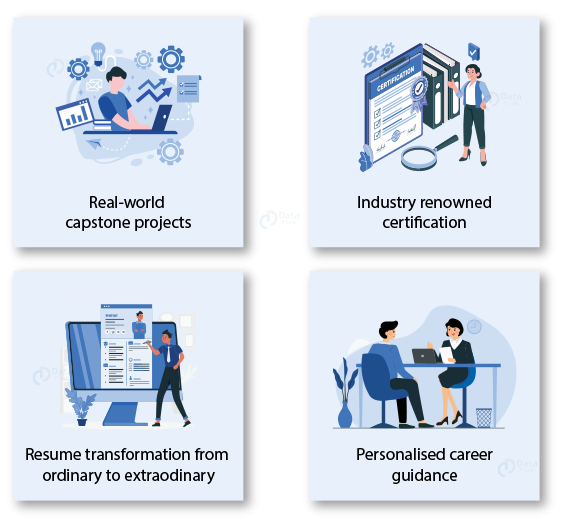
Industry-renowned Certification

Need Personalized Guidance? Talk Directly to Your Instructor

Online Spring Boot Training Course Curriculum
- Overview of Spring Boot
- Benefits and features
- Setting up a Spring Boot project
- Understanding dependency injection
- Leveraging Spring Boot’s auto-configuration
- Customizing auto-configuration
- Introduction to RESTful architecture
- Creating REST controllers
- Handling HTTP requests and responses
- Working with relational databases
- Using Spring Data JPA for data access
- Implementing CRUD operations
- Authentication and authorization
- Securing RESTful APIs
- Implementing OAuth2 for authentication
- Unit testing with JUnit and Mockito
- Integration testing with Spring Boot Test
- Test-driven development (TDD) practices
- Spring Boot Actuator for monitoring and management
- Caching with Spring Boot
- Asynchronous programming with Spring Boot
- Packaging and deploying Spring Boot applications
- Continuous integration and deployment (CI/CD) pipelines
- Containerization with Docker and Kubernetes
- Introduction to microservices architecture
- Building microservices with Spring Boot
- Service discovery and communication
- Introduction to reactive programming
- Implementing reactive APIs with Spring WebFlux
- Handling streams of data with reactive programming
- Design patterns in Spring Boot applications
- Implementing best practices for maintainable code
- Performance optimization techniques
- Building a complete Spring Boot application from scratch
- Solving real-world challenges using Spring Boot
- Hands-on projects to reinforce learning
- Overview of Spring Framework and its ecosystem
- Understanding Inversion of Control (IoC) and Dependency Injection (DI)
- Setting up the development environment with Maven or Gradle
- Creating a basic Spring application
- Bean lifecycle and scopes
- Autowiring and annotation-based configuration
- Java-based configuration vs. XML configuration
- Using Spring Expression Language (SpEL)
- Integrating JDBC with Spring
- Using Spring’s JdbcTemplate for database operations
- Introduction to Object-Relational Mapping (ORM) with Hibernate
- Implementing transactions and exception handling
- Understanding cross-cutting concerns
- Defining aspects, pointcuts, and advices
- Implementing AOP using annotations
- Use cases: logging, security, and transaction management
- Understanding the Model-View-Controller architecture
- Role of DispatcherServlet in request handling
- Setting up a basic Spring MVC project
- Configuring view resolvers and controllers
- Creating controllers using @Controller annotation
- Mapping requests with @RequestMapping
- Handling path variables and request parameters
- Returning views and model data
- Creating and processing HTML forms
- Binding form data to Java objects using @ModelAttribute
- Implementing form validation with JSR-303 annotations
- Displaying validation errors in views
- Integrating JSP with JSTL for dynamic views
- Using Thymeleaf as a modern templating engine
- Switching between different view resolvers
- Creating reusable templates and fragments
- Understanding REST principles
- Building RESTful APIs using @RestController
- Handling JSON and XML responses
- Implementing CRUD operations for REST endpoints
- Global exception handling with @ControllerAdvice
- Customizing error responses
- Using HandlerInterceptor for request pre/post-processing
- Implementing logging and authentication checks
- Configuring multipart file uploads
- Handling file storage and retrieval
- Implementing file download functionality
- Securing file access and validating file types
- Integrating Spring Security for authentication and authorization
- Configuring security for web applications
- Implementing login, logout, and access control
- Protecting REST endpoints with security annotations
Learn From Industry’s Best Instructors


Your Spring Boot Journey Starts Here
Master Spring Boot from Scratch
Join our hands-on Spring Boot course crafted by industry veterans and build real-world skills. It’s not just a course, it’s a job-ready bootcamp.Start Anytime (self-paced) |
Access Duration 🕗 Lifetime |
Price |
Enroll Now |





Spring Boot Course Objectives
Participants will leave the course with the knowledge and skills necessary to use Spring Boot successfully in their projects, improving their productivity and future employment opportunities in Java web development. This is because the course will emphasize hands-on learning with an emphasis on practical application under the direction of knowledgeable instructors.
The Spring Boot training course aims to give learners a thorough understanding of the framework and how it is used in contemporary software development. First and foremost, the course seeks to acquaint participants with the fundamental ideas behind Spring Boot, such as auto-configuration, dependency injection, and Spring Boot starts. Using build tools like Maven or Gradle, participants will learn how to manage dependencies properly, adjust application properties, and start from scratch with a Spring Boot project.
Through practical examples and hands-on exercises, participants will become proficient in developing RESTful APIs, implementing CRUD activities, and interfacing with databases using Spring Data JPA or other persistence technologies. The workshop also attempts to provide learners with advanced knowledge and methods for using Spring Boot to create enterprise-level apps. To construct reliable and scalable applications, participants will learn about industry standards and best practices related to security, testing, logging, and monitoring in Spring Boot applications.
Why should you learn Spring Boot?
- “Spring Boot simplifies Java development by providing robust tools and conventions, allowing developers to focus on building great applications.” – Pivotal Software
- “With over 3 million developers worldwide using Spring Boot, it has become the industry standard for Java-based web application development.” – Spring Boot Website
- “According to Stack Overflow Developer Survey 2021, Spring Boot is among the top frameworks that developers want to work with, indicating its popularity and demand in the industry.”
- “Spring Boot’s microservices architecture enables developers to build scalable and modular applications, crucial for modern cloud-native environments.” – Red Hat
- “LinkedIn’s migration to Spring Boot resulted in a 15x improvement in productivity and a significant reduction in time-to-market for new features.” – LinkedIn Engineering Blog
What is Spring Boot?
A Java framework called Spring Boot is available as open source software that makes it easier to create standalone, enterprise-level apps. With a number of features and standards available right out of the box, it gives developers a more efficient way to create Java-based apps.
Without having to install a lot of boilerplate code and infrastructure, Spring Boot frees up developers’ time so they can concentrate more on building business logic and less on configuring the application environment. Utilizing built-in capabilities like embedded servers, metrics, health checks, and security, developers can quickly bootstrap projects with Spring Boot and guarantee robustness by using auto-configure components.
Fundamentally, Spring Boot extends the capabilities of the Spring Framework by incorporating new tools and conventions to streamline development chores. It encourages the “convention over configuration” school of thought, which holds that developers can minimize the amount of human setup and configuration required by taking advantage of logical defaults and common configurations.
What to do before you begin?
Students are requested to go through the prerequisites of this Spring Boot course. These prerequisites will guide you better on how to get the most potential of this course-
- It is beneficial to have a basic understanding of the Java programming language. It encompasses object-oriented programming ideas, data types, control structures, and grammar.
- Although not required, some knowledge of the Spring Framework can be helpful, especially regarding ideas like dependency injection and inversion of control.
- Learning Spring Boot will be more accessible with a foundational understanding of web development principles like HTTP, RESTful APIs, and MVC architecture.
- Before beginning the course, ensure you have an Integrated programming Environment (IDE) like Eclipse or IntelliJ IDEA set up with the required plugins for Spring Boot programming.
Who should go for this Spring Boot course?
This exclusive training on Spring Boot is quite a beneficial learning opportunity for those you are into Java-based web applications development and more. Following people should definitely consider going for this training-
- Aspiring Java Developers
- Web Application Development Enthusiasts
- Aspiring Software Engineers
- IT Graduates and Students
- Aspiring Solution Architects
- DevOps Engineering Enthusiasts
By enrolling in our Spring Boot course, you can expect the following benefits:
The course will cover how to build a Spring Boot project, set up the application’s properties, and effectively manage dependencies using Gradle or Maven. They will explore utilizing Spring Boot to develop RESTful APIs, CRUD operations, request and response processing, and data persistence management with Spring Data JPA or alternative ORM frameworks.
They will learn how to create and manage controllers, services, repositories, and DTOs, among other parts of a Spring Boot application. In addition, design patterns, industry standards, and best practices for creating scalable, maintainable, and performant Spring Boot applications will be covered for participants.
TechVidvan is known widely for its exquisite courses, which give students a wholesome learning experience and a lifetime of resources. The following are the benefits of this Spring Boot course-
- Remain informed on the most recent developments, methods, and styles in Spring Boot programming.
- Advance your career by considering job possibilities and career prospects in Java web development and similar disciplines.
- After finishing, get certified to demonstrate your proficiency with Spring Boot development.
- Establish connections with colleagues, business leaders, and subject matter experts to promote cooperation and information exchange.
- Select from various learning options, such as self-paced modules, online courses, and in-person workshops.
- Acquire practical expertise in creating, evaluating, implementing, and managing Spring Boot apps.
- Increase your reputation and marketability by being recognized in the industry for your proficiency in Spring Boot development.
- Acquire the ability to use the Spring Boot framework to solve complicated problems and take on real-world difficulties.
Jobs after Learning this Spring Boot Course
Once you have completed the course, you will have the required skills and knowledge to work for various job opportunities, some of which are as follows-
- Java Developer
Java developers are responsible for creating, creating, and managing Java-based programs. With their knowledge of Spring Boot, they can use its capabilities, such as dependency injection, auto-configuration, and RESTful API development, to build dependable and scalable web apps.
- Full Stack Developer
Full-stack developers specialize in front-end and back-end development. They create server-side logic with Spring Boot and combine it with front-end technologies such as JavaScript frameworks, HTML, and CSS. Spring Boot-savvy full-stack developers can design end-to-end systems, implement RESTful APIs, and guarantee smooth client-server communication.
- Software Engineer
Software engineers leverage their knowledge of Spring Boot to create and manage software solutions. Using industry standards and best practices, they analyze requirements, develop the architecture, and implement functionality. Software developers work with stakeholders to comprehend business requirements and provide excellent solutions that satisfy customer demands.
- Microservices Developer
Using Spring Boot, microservices developers create and build microservice-based architectures. They disassemble monolithic apps into more manageable, standalone services, each in charge of particular functions. To develop scalable and robust systems, microservices developers take advantage of Spring Boot’s features for distributed data management, fault tolerance, and service discovery.
- Cloud Application Developer
Cloud application developers create and implement cloud-native apps using platforms such as AWS, Azure, and Google Cloud. They also create cloud-ready apps with Spring Boot that can handle fluctuating workloads, scale dynamically, and easily interface with cloud services.
- DevOps Engineer
DevOps engineers prioritize streamlining and automating software development processes, from code deployment to monitoring and maintenance. Their proficiency with Spring Boot enables them to automate infrastructure provisioning, establish CI/CD pipelines, and guarantee the scalability and dependability of applications in real-world settings.
- Solution Architect
Considering scalability requirements, business objectives, and technological requirements, solution architects create and supervise the execution of software systems. They create flexible, modular structures with Spring Boot that may change to meet changing business requirements. Solution architects work with stakeholders to specify the project parameters, assign tasks, and guarantee that the project is in line with organizational objectives.
- Web application developer
Our students are working in leading organizations

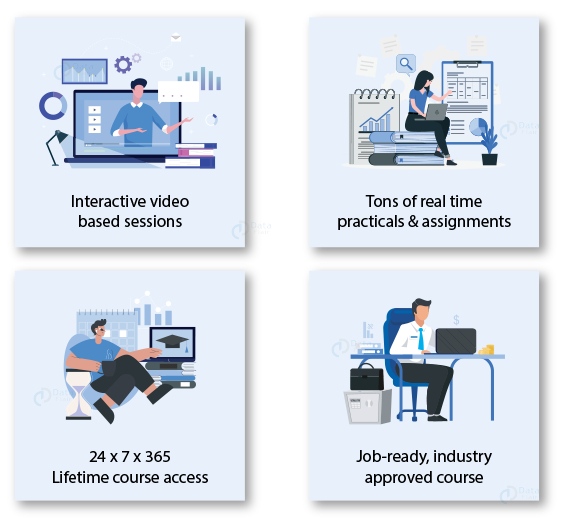
Features of Spring Boot Course
Looking for Industry Expert Counselling?
We are a team of trainers who have 20+ years of Industry Experience. They provide project based training and cover real time scenarios during the interactive training sessions.
Contact our Industry Experts & get answers to all your queries.
Spring Boot Online Training FAQs
An open-source Java framework called Spring Boot makes it easier to create production-quality, standalone Spring-based apps. It offers a methodology that prioritizes convention over configuration and has built-in tools to make deployment, dependency management, and application setup more efficient.
Numerous advantages come with Spring Boot, such as quick application development, easier configuration, support for embedded servers, auto-configuration of Spring beans, simple dependency management using Gradle or Maven, and smooth integration with other Spring projects.
Absolutely, Spring Boot’s lightweight and modular nature makes it ideal for developing microservices. Building scalable and robust microservices is made easy by its capabilities, which include auto-configuration, support for cloud-native development, and embedded servers.
Building web applications, RESTful APIs, microservices, batch processing apps, and enterprise integration solutions are common uses for Spring Boot. It is also well-liked for creating cloud-native apps and putting them on AWS, Azure, and Google Cloud platforms.
Spring Boot enhances the original Spring framework by offering auto-configuration, integrated servers, streamlined configuration, and features that are ready for production right out of the box. It frees developers from writing boilerplate code and tedious setup, enabling them to concentrate on creating business logic.
One of Spring Boot’s primary features is auto-configuration, which sets up the application automatically depending on the dependencies in the classpath. In order to reduce manual configuration and provide logical defaults, it evaluates the environment and application context, increasing developer efficiency.
Absolutely, integrating Spring Boot with other frameworks and technologies is simple. With its smooth interface with well-known databases, messaging apps, front-end frameworks, and libraries, developers may take advantage of the greatest tools available for their job.
Applications developed using Spring Boot can be installed using a variety of methods, such as standalone JAR files, WAR files loaded into servlet containers such as Tomcat or Jetty, Docker containers, or cloud-native systems like Cloud Foundry and Kubernetes.
Despite its strength and abundance of features, Spring Boot may be difficult for novices to understand. However, developers of all skill levels, even novices, can utilize it thanks to its comprehensive documentation, tutorials, and community support.
Debugging code, examining logs, and utilizing diagnostic tools offered by Spring Boot and the supporting technologies are all part of troubleshooting problems in a Spring Boot application. Effective problem solving can also be aided by consulting documentation, community forums, and asking seasoned developers for assistance.