
What is Nodejs?
Node.js is a popular JavaScript runtime environment used for building high-performance, scalable web applications. This article aims to provide an in-depth introduction to Node.js, covering its architecture, modules, and event-driven programming model.
As a cross-platform and open-source platform, Node.js has revolutionized web development by enabling developers to build server-side applications using JavaScript. In this post, we will explore the basics of Node.js and some of its most popular frameworks and libraries, such as Express, Socket.IO, and Mongoose.
This post will provide a comprehensive understanding of this powerful tool for building web applications to those who are:
- New to Node.js
- An experienced developer seeking to expand his knowledge
So, let’s dive into the world of Node.js and discover what makes it such a versatile and efficient solution for web development.
Features of Node.js
It comes with a wide range of features. Here are some of the key features of Node.js:
1. Asynchronous programming:
This makes Node.js suitable for developing applications that require great performance and scalability, such as real-time chat applications or online gaming platforms.
2. Scalability:
Node.js is also very scalable and lightweight, which means it can handle a huge number of connections while using few resources. This makes it an excellent choice for developing applications that must manage a high volume of traffic or operate on low-powered devices.
3. Built-in package manager:
Node.js comes with a built-in package manager called npm (Node Package Manager), which makes it easy to install and manage third-party modules and libraries.
4. JSON support:
Node.js has built-in support for JSON (JavaScript Object Notation), which makes it easy to work with data interchangeably between server and client-side code.
5. Easy to learn:
Node.js is easy to learn for developers who are already familiar with JavaScript, as it uses the same language on both the client and server-side.
Need of Node.js
There are various reasons why you should use NodeJs, Some of them are:
1. High performance:
Node.js is known for its ability to handle large amounts of data and handle multiple requests simultaneously. This makes it an ideal choice for building high-performance web applications that require fast, efficient data processing.
2. Vast array of libraries and frameworks:
Node.js has a vast array of libraries and frameworks available that can be used to streamline the development process and simplify tasks. For instance, Express.js is a popular Node.js framework that simplifies the process of building web servers, while Socket.io makes it easy to handle real-time communication between client and server.
3. Open-source technology:
Node.js is an open-source technology, which means that it is free to use and has a large community of developers contributing to its ongoing development and improvement. This makes it an excellent choice for students looking to gain practical experience with a cutting-edge technology that is in high demand by employers.
Who should choose node.js?
Some of its features like:
- Asynchronous programming capabilities
- Lightweight footprint
- Scalability
- Built-in JSON support
make it an excellent choice for developing high-performance, real-time online applications that can manage a high volume of traffic and data interchange.
Node.js key Concepts
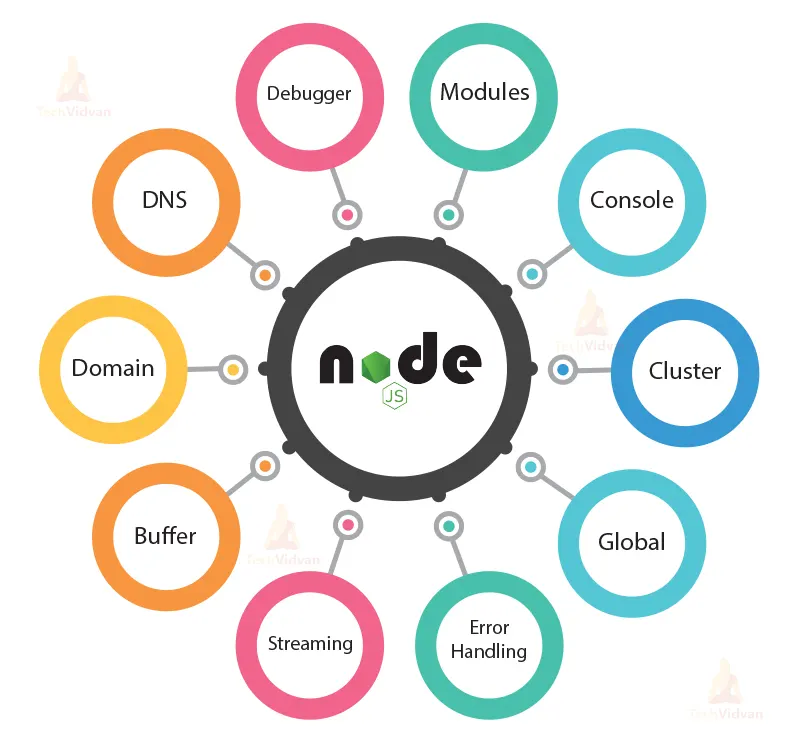
What can Node.js do?
It can be used for server-side scripting, asynchronous programming, real-time web applications, command-line tools, data streaming, and microservices. Its built-in support for WebSockets and data streaming make it particularly well-suited for real-time applications and processing large amounts of data. Node.js is also simple to learn and has a large developer community, making it an excellent choice for creating fast and scalable applications.
What is a Node.js File?
A Node.js file is a JavaScript module that contains code for defining functions, objects, or other modules that can be used in other files or applications. It can also be used as a script to perform system administration tasks or to automate tasks. Node.js files can also be used to define HTTP servers and APIs, which makes it simple to create fast and scalable web servers and APIs.
Example of NodeJs application:
Now, we are creating a basic NodeJs application, here’s how to code it:
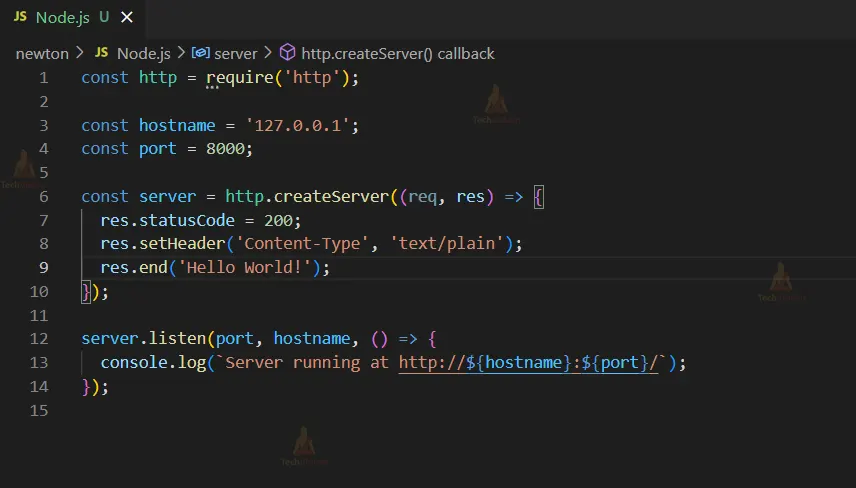
This example shows a simple Node.js application that creates a web server and listens for incoming HTTP requests on port 3000. When a request is received, it responds with a plain text message “Hello World!”.
In this code, the ‘http’ module is used to create a server using the ‘createServer’ method. The server is set to listen on port 3000, and when a request is received, the ‘createServer’ callback function is executed. The response is set to have a 200 status code and a plain text content type. The response is then ended with the message “Hello World!”. Finally, the server is started, and a message is logged to the console indicating that it is running.
On running the command ‘nodemon Node.js’. You will see a terminal like this:

Where to use Node.js?
1. Real-time applications:
Node.js is an excellent choice for real-time applications that require fast and efficient data processing, such as chat applications, online gaming, and collaborative tools.
2. High-traffic web applications:
Node.js can handle large amounts of traffic and scale easily, making it ideal for building high-traffic web applications such as social media platforms or e-commerce sites.
3. Microservices architecture:
Node.js is well-suited for building microservices that can work together to form a larger application. Its lightweight, modular architecture allows developers to build scalable and maintainable systems.
Where not to use Node.js:
1. CPU-intensive applications:
Node.js is not suitable for CPU-intensive tasks such as video encoding, machine learning, or scientific computing. This is because Node.js runs on a single thread, making it less efficient for tasks that require heavy processing.
2. Applications that require extensive blocking I/O:
Node.js is designed to handle non-blocking I/O tasks, and therefore, it may not be the best choice for applications that require extensive blocking I/O operations, such as file processing or database operations.
3. Large codebases:
Node.js is a lightweight technology and is not designed to handle large codebases. It may not be the best choice for complex applications that require extensive codebases with multiple modules and dependencies.
Advantages of using Node.Js:
Here are some of the key advantages of using Node.js:
1. Fast and scalable:
Node.js is known for its fast performance and scalability, making it an ideal choice for building high-performance web applications that can handle large amounts of traffic.
2. Single-threaded and non-blocking I/O:
Node.js is designed to handle non-blocking I/O tasks, which means that it can handle multiple requests at once without blocking other requests. This makes it ideal for building real-time applications such as chat applications and online gaming platforms.
3. JavaScript-based:
Node.js is based on JavaScript, which is a popular language that is widely used by developers. This makes it easy for developers to learn and use Node.js, especially if they already have experience with JavaScript.
4. Large ecosystem:
Node.js has a large ecosystem of modules and libraries that can be used to simplify development tasks and speed up the development process. For instance, popular Node.js frameworks like Express.js and Socket.io make it easy to build web servers and handle real-time communication between client and server.
5. Open-source and community-driven:
Node.js is an open-source technology, which means that it is free to use and has a large community of developers contributing to its development and improvement. This ensures that Node.js is continuously evolving and improving, with new features and functionality being added all the time.
Conclusion
Node.js is an efficient, scalable, and easy-to-use platform for building server-side applications. Its event-driven, non-blocking I/O model, active community, and ability to handle a large number of concurrent connections make it an excellent choice for real-time applications. Whether you are a seasoned developer or a beginner, Node.js is a platform that is worth exploring.